
Egira hiemalis
Grote, 1874
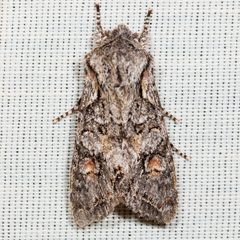
Egira hiemalis is a noctuid native to western North America. are active during winter and early spring, an unusual seasonality for Lepidoptera. The species is notable for its cold-weather activity pattern and association with coniferous and hardwood plants. It was first described by Grote in 1874 under the basionym Xylomiges hiemalis.


Pronunciation
How to pronounce Egira hiemalis: /ɛˈɡiːrə hiˈɛməlɪs/
These audio files are automatically generated. While they are not always 100% accurate, they are a good starting point.
Identification
Distinguished from congeneric by its winter-early spring period, which is atypical for most Egira species. The specific epithet 'hiemalis' (Latin for 'of winter') reflects this seasonal activity. Accurate identification requires examination of genitalia or molecular analysis; superficial resemblance to other small noctuids necessitates expert verification.
Images
Appearance
Wingspan approximately 36 mm. Specific coloration and pattern details are not documented in available sources.
Habitat
Associated with forested environments supporting its larval plants, including coniferous forests and mixed woodlands. Specific microhabitat preferences for are not documented.
Distribution
Western North America from British Columbia south through Washington and Oregon to California.
Seasonality
active in winter through early spring in the Pacific Northwest and California; in British Columbia, period occurs later in spring. This represents an unusual cold-season activity pattern for a noctuid .
Diet
Larvae feed on diverse woody plants: Pseudotsuga menziesii (Douglas-fir), Abies amabilis (Pacific silver fir), Abies grandis (grand fir), Tsuga heterophylla (western hemlock), Purshia tridentata (antelope bitterbrush), Corylus cornuta (beaked hazelnut), and Fraxinus latifolia (Oregon ash). feeding habits are not documented.
Host Associations
- Pseudotsuga menziesii - larval food plantDouglas-fir
- Abies amabilis - larval food plantPacific silver fir
- Abies grandis - larval food plantgrand fir
- Tsuga heterophylla - larval food plantwestern hemlock
- Purshia tridentata - larval food plantantelope bitterbrush
- Corylus cornuta - larval food plantbeaked hazelnut
- Fraxinus latifolia - larval food plantOregon ash
Behavior
are active during cold weather conditions when most Lepidoptera are . Specific such as mating, oviposition, or larval habits have not been documented in detail.
Ecological Role
Larval stage functions as a folivore on diverse woody plants, potentially contributing to nutrient cycling in forest . Specific ecological impacts have not been quantified.
Human Relevance
No documented economic or agricultural significance. Not known to be a pest .
Similar Taxa
- Egira curialisSimilar and general ; distinguished by different seasonal activity (E. curialis is an early-season pest in citrus groves, active in spring) and different geographic range and associations
- Other Egira speciesMost congeneric fly during warmer months; winter period is diagnostic for E. hiemalis