
Egira februalis
Barnes & McDunnough, 1918
mottled oak woodling moth, mottled oak woodling
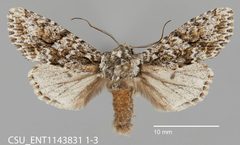
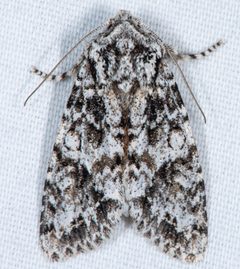
Egira februalis is a noctuid commonly known as the mottled oak woodling. It is a late-winter to early-spring flier found in oak-dominated of western North America. The exhibits lichen-mimicking coloration and is , readily attracted to artificial lights. Its larvae are specialized feeders on oaks (Quercus spp.).
Pronunciation
How to pronounce Egira februalis: //ˈɛɡɪrə ˌfɛbɹuˈeɪlɪs//
These audio files are automatically generated. While they are not always 100% accurate, they are a good starting point.
Identification
Sea-green to grayish mottled forewings with lichen-like patterning. Distinguished from similar noctuids by its late-winter period and association with oak . The specific epithet 'februalis' references its February flight timing.
Images
Habitat
Oak woodlands and mixed hardwood forests with oaks at low to moderate elevations. Strongly associated with Quercus-dominated vegetation .
Distribution
Western North America from the Pacific Northwest (western Oregon, north to the Columbia River) south through California to the Mexican border, including the northern Sierra Nevada. Absent from adjacent Washington state.
Seasonality
Late winter to early spring; active February through March in most of range. .
Diet
Larval food plant on oaks (Quercus spp.).
Behavior
; comes readily to artificial lights. simulate lichen when at rest.
Ecological Role
Oak herbivore; contributes to nutrient cycling in oak woodland .
Similar Taxa
- Feralia februalisFormerly considered or closely related; both share lichen-mimicking appearance, late-winter , and oak-feeding . Currently treated as distinct but historically confused.