
Xestia oblata
Morrison, 1875
Ruby Dart, Rosy Dart
Pronunciation
How to pronounce Xestia oblata: /ˈkzɛsti.ə oʊˈblɑtə/
These audio files are automatically generated. While they are not always 100% accurate, they are a good starting point.
Identification
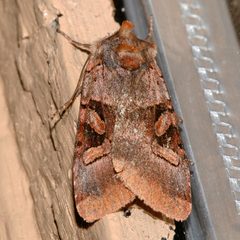
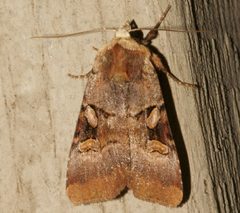
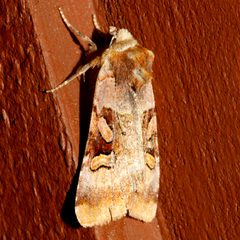
The ruby dart can be distinguished from similar Xestia by its characteristic coloration, which includes rosy or ruby tones referenced in its . As a member of the cutworm moth group, it shares the general Noctuidae body plan with stout bodies and relatively dull coloration compared to more colorful . Positive identification to species level typically requires examination of genitalia or reference to regional keys.
Images
Distribution
North America. Documented occurrences include the Canadian provinces of Alberta, Manitoba, and Saskatchewan, and the U.S. state of Vermont.
More Details
Taxonomic History
Originally described as Agrotis oblata by Morrison in 1875, the was later transferred to the Xestia. The basionym Agrotis oblata is preserved in taxonomic records.
Subspecies
Two are recognized: the nominate Xestia oblata oblata and Xestia oblata streckeri Barnes & Benjamin, 1927.
Cataloging Information
The is cataloged under Hodges number 10947 in the North American Photographers Group (MONA) numbering system.