
Xestia elimata
Guenée, 1852
Southern Variable Dart, Variable Climbing Caterpillar
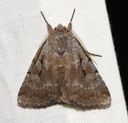
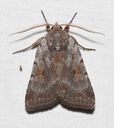
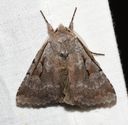
Xestia elimata is a noctuid native to eastern North America. are active in autumn with a single per year. The is part of a cryptic complex with X. praevia and X. badicollis, which may represent a single species based on genital and similarities. Larvae feed on hard pines.
Pronunciation
How to pronounce Xestia elimata: //ˈzɛs.ti.ə ɛˈliː.mə.tə//
These audio files are automatically generated. While they are not always 100% accurate, they are a good starting point.
Identification
Distinguishing X. elimata from its X. praevia and X. badicollis requires examination of genitalia or analysis; external alone is insufficient. Within the elimata group, geographic distribution may aid identification: X. elimata occurs in the southeastern and mid-Atlantic United States, while X. praevia and X. badicollis have different ranges.
Images
Habitat
Pine forests and woodlands, particularly those containing hard pine .
Distribution
Eastern North America: Georgia, Tennessee, North Carolina, New Jersey, Maryland, and New England. Records also from Vermont.
Seasonality
fly from September to October, with timing varying by latitude. One per year.
Diet
Larva feeds on Pinus , specifically hard pines including pitch pine (Pinus rigida) and red pine (Pinus resinosa).
Host Associations
- Pinus rigida - larval food plantpitch pine
- Pinus resinosa - larval food plantred pine
Life Cycle
: one per year. stage not specified in sources.
Ecological Role
Larval herbivore on pine trees; contributes to nutrient cycling in coniferous forest .
Similar Taxa
- Xestia praevia in elimata group; no significant genital or differences
- Xestia badicollis in elimata group; no significant genital or differences
Misconceptions
The three X. elimata, X. praevia, and X. badicollis have been treated as distinct based on geography and minor morphological differences, but may represent a single biological species.
More Details
Taxonomic Uncertainty
The elimata group presents a taxonomic challenge. Wagner et al. (2011) note that X. elimata, X. praevia, and X. badicollis show no significant differences in genitalia or , suggesting they may be .
Larval Habits
The 'variable climbing caterpillar' refers to the larval of climbing on pine foliage to feed.