
Pseudohermonassa bicarnea
Guenée, 1852
Pink-spotted Dart
A medium-sized noctuid found in eastern North America, with active from mid-summer through autumn. The has a single and is associated with wetland where its larval plants grow. First described in 1852, it remains relatively common across its range.
Pronunciation
How to pronounce Pseudohermonassa bicarnea: /ˌsjuːdoʊˌhɜːrmoʊˈnæsə baɪˈkɑːrniə/
These audio files are automatically generated. While they are not always 100% accurate, they are a good starting point.
Identification
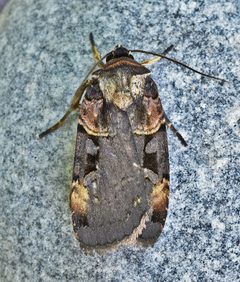
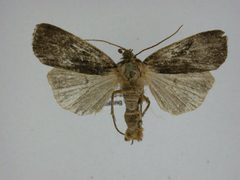
Look for pinkish or rose-colored spots on the forewings, which are usually visible even in worn specimens. The combination of moderate size (wingspan 32–43 mm), dull brown ground color, and July–October period helps separate it from related dart moths. Genitalia examination may be required for definitive identification from similar Pseudohermonassa .
Images
Appearance
Wingspan 32–43 mm. Forewings brownish with pinkish spots or streaks, giving rise to the . Hindwings pale, often whitish or light gray. Overall coloration variable but generally dull brown with subtle pinkish markings.
Habitat
Associated with wetlands, marshes, and moist meadows where larval plants (Glyceria spp.) occur. Also found in adjacent upland areas.
Distribution
Eastern North America, from the Atlantic coast west to south-central Saskatchewan and central North Dakota. Southern limit in western North Carolina, with recent records from Tennessee.
Seasonality
active July through October. Single per year ().
Diet
Larvae feed on Glyceria maxima and Glyceria canadensis (mannagrass ). Older literature records additional plants (Vaccinium, Betula populifolia, Taraxacum officinale, Acer, meadowsweet) but these may represent misidentifications or incidental feeding.
Host Associations
- Glyceria maxima - larval food plantprimary
- Glyceria canadensis - larval food plantprimary
Life Cycle
Single . emerge mid-summer and are active through autumn. Larval stage presumably occurs in spring and early summer, though specific timing is poorly documented. stage unknown but likely as or larva.
Behavior
are and attracted to light. Larvae are presumed to feed internally or in concealed positions on grasses, though specific is poorly documented.
Ecological Role
Larval herbivore on wetland grasses; contributes to nutrient cycling in marsh . Serves as prey for birds, bats, and other .
Human Relevance
Occasionally encountered by enthusiasts at light traps. No economic significance. for wetland quality.
Similar Taxa
- Pseudohermonassa tenuiculaSimilar size and coloration, but lacks pink forewing spots and has different distribution and preferences
- Other Noctua/Pseudohermonassa speciesMany brown noctuids with pale hindwings; pink spots and specific period help distinguish P. bicarnea
Misconceptions
Older literature lists diverse food plants (including Vaccinium, Betula, Acer) that likely represent misidentifications of larvae or confusion with other ; modern sources restrict to Glyceria grasses.
More Details
Conservation Status
Not evaluated by IUCN; appears secure throughout range based on iNaturalist observations and museum records
Taxonomic History
Described by Achille Guenée in 1852; has remained in Pseudohermonassa without major revision