
Diarsia rosaria
Grote, 1878
Freeman's Dart, Rosy Dart
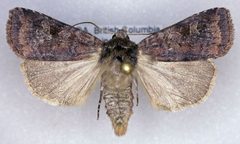
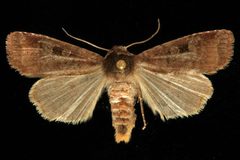
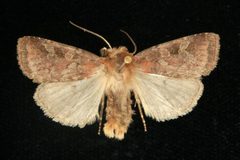
Diarsia rosaria is a small noctuid with a wingspan of approximately 30 mm. It occurs across much of Canada from Yukon to Newfoundland and Labrador, extending south to northern California and eastern Oregon. The is abundant in wet conifer forests and has two recognized : D. r. rosaria and D. r. freemani.
Pronunciation
How to pronounce Diarsia rosaria: //daɪˈɑrsɪə roʊˈzɑriə//
These audio files are automatically generated. While they are not always 100% accurate, they are a good starting point.
Identification
Wingspan approximately 30 mm. Specific diagnostic features distinguishing it from similar Diarsia are not documented in available sources. The D. r. freemani was described by Hardwick in 1950, suggesting geographic variation exists.
Images
Habitat
Wet conifer forests. Abundant and widely distributed within this forest type.
Distribution
Canada: Ontario, Quebec, New Brunswick, Nova Scotia, Newfoundland and Labrador, British Columbia, Alberta, Saskatchewan, and Yukon. United States: northern California and eastern Oregon.
Diet
Larvae feed on various grasses.
Similar Taxa
- Xestia oblataAlso known as 'rosy dart'; shared may cause confusion
Sources and further reading
- BugGuide
- Wikipedia
- GBIF taxonomy match
- iNaturalist taxon
- NCBI Taxonomy
- Catalogue of Life
- The Days of Bees and Roses | Bug Squad
- The Most Incredible Image of a Leafcutter Bee | Bug Squad
- Celebrating Roses, UC Davis-Style, Just in Time for Mother's Day | Bug Squad
- Everything's Coming Up Roses | Bug Squad
- Day 5 of National Pollinator Week: The Leafcutter Bee | Bug Squad