
Diarsia calgary
Smith, 1898
Calgary Dart
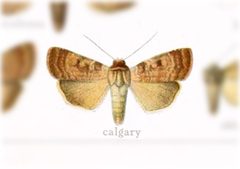
Diarsia calgary, commonly known as the Calgary Dart, is a noctuid described by Smith in 1898. It is a medium-sized moth with a wingspan of approximately 30 mm. The occupies a broad elevational range across western North America, from subarctic Yukon through mountainous regions to the southwestern United States.


Pronunciation
How to pronounce Diarsia calgary: /dɪˈɑːrsiə ˈkælɡəri/
These audio files are automatically generated. While they are not always 100% accurate, they are a good starting point.
Identification
The Calgary Dart can be distinguished from other Diarsia by its geographic distribution and associated montane . Definitive identification likely requires examination of genitalic structures or molecular analysis, as is typical for species within this .
Images
Habitat
Mountains and foothills across western North America. Occupies a broad elevational gradient from subarctic tundra to montane forests and southwestern scrublands.
Distribution
North America: Yukon south through British Columbia and Alberta to Arizona and New Mexico, west to the Pacific coast of British Columbia. A disjunct occurs in central western California, separated from the main range.
Similar Taxa
- Other Diarsia speciesSimilar general ; identification requires detailed examination or geographic context
More Details
Sources and further reading
- BugGuide
- Wikipedia
- GBIF taxonomy match
- iNaturalist taxon
- NCBI Taxonomy
- Catalogue of Life
- UC Davis Doctoral Student Jackson Audley: On the Road to Improve Forest Health | Bug Squad
- A Troubling Question: Why Are the Monarchs Declining in the West? | Bug Squad
- Curious isolation: new butterfly species discovered | Blog
- Bug Eric: Wasp Wednesday: Black & Yellow Mud Dauber
- Putting Bumble Bees in a Box Might Help Scientists Study Their Nesting Ecology