
Coenophila
Stephens, 1850
rosy marsh moth (for C. subrosea)
Species Guides
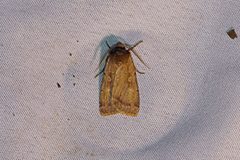
1- Coenophila opacifrons(Blueberry Dart)
Coenophila is a of owlet moths (Noctuidae) established by Stephens in 1850. The genus contains at least two recognized , including the rosy marsh (C. subrosea), which is found in northern Europe and has been introduced to North America. Records indicate presence in Denmark, Norway, Sweden, and the northeastern United States.
Pronunciation
How to pronounce Coenophila: //siːˈnɒfɪlə//
These audio files are automatically generated. While they are not always 100% accurate, they are a good starting point.
Identification
within Coenophila can be distinguished from related noctuine by genitalic characters; external is generally nondescript and requires dissection for reliable identification. C. subrosea has a distinctive rosy-pink forewing coloration that separates it from the duller C. opacifrons.
Images
Habitat
C. subrosea is associated with marshy and wetland , including fens and bog margins, reflecting its .
Distribution
Documented from northern Europe (Denmark, Norway, Sweden) and the northeastern United States (Vermont). The North American likely represents an introduction of European origin.
Similar Taxa
More Details
Taxonomic note
The contains two historically recognized : C. opacifrons Grote, 1878 (North America) and C. subrosea Stephens, 1829 (Europe, introduced to North America). The relationship between these and their taxonomic status has been subject to revision; some treatments have considered them .