
Agnorisma badinodis
Grote, 1874
Pale-banded Dart, Spotted-sided Cutworm
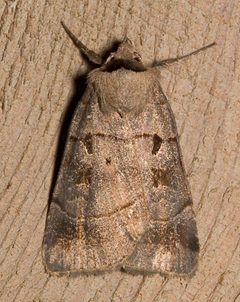
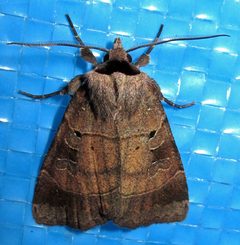
Agnorisma badinodis is a noctuid with a wingspan of approximately 36 mm. It occurs in southern Canada and the eastern United States, with one annually. Larvae feed on a broad range of herbaceous plants and crops.
Pronunciation
How to pronounce Agnorisma badinodis: /æɡˈnɔɹɪzmə bædɪˈnoʊdɪs/
These audio files are automatically generated. While they are not always 100% accurate, they are a good starting point.
Identification
The pale banded forewing pattern distinguishes this from similar noctuids. The specific epithet references the 'badinodis' (two-knotted) marking pattern. Confirmation may require examination of genitalia or reference to regional identification guides.
Images
Appearance
Wingspan approximately 36 mm. Forewings display a pale banded pattern characteristic of the . Overall coloration and pattern details consistent with Noctuinae .
Distribution
Southern Canada and the United States east of the 100th meridian; absent from the Deep South. Records include Vermont and other eastern states.
Seasonality
One per year; active during the growing season in temperate regions.
Diet
Larvae have been recorded feeding on: Brassica nigra (black mustard), Malus (apple), Medicago sativa (alfalfa), Nicotiana tabacum (tobacco), Rumex crispus (curly dock), Sisymbrium officinale (hedge mustard), Stellaria media (chickweed), Symphyotrichum ericoides (white heath aster), Trifolium (clover), Triticum aestivum (wheat), and Vitis (grape).
Host Associations
- Brassica nigra - larval food plantrecorded
- Malus - larval food plantrecorded
- Medicago sativa - larval food plantrecorded
- Nicotiana tabacum - larval food plantrecorded
- Rumex crispus - larval food plantrecorded
- Sisymbrium officinale - larval food plantrecorded
- Stellaria media - larval food plantrecorded
- Symphyotrichum ericoides - larval food plantrecorded
- Trifolium - larval food plantrecorded
- Triticum aestivum - larval food plantrecorded
- Vitis - larval food plantrecorded
Life Cycle
: one per year. Complete with , larval, pupal, and stages. Larval stage is the active feeding period.
Ecological Role
Larval herbivory on diverse plant ; feeder on both wild plants and agricultural crops. May function as a minor agricultural pest in some regions.
Human Relevance
Occasional pest of agricultural crops including alfalfa, wheat, tobacco, and fruit trees. The 'spotted-sided ' refers to larval feeding habit.
Similar Taxa
- Other Agnorisma speciesCongeneric share similar size and general Noctuinae ; require examination of genitalic structures or wing pattern details for separation.
- Other Noctuinae cutwormsMany noctuine larvae are cutworms with similar habits and appearance; genitalia or specific forewing markings are needed for definitive identification.