
Euxoa aurulenta
(Smith, 1888)
Dune Cutworm Moth, dune cutworm
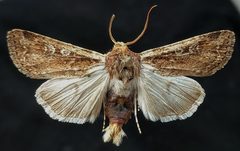
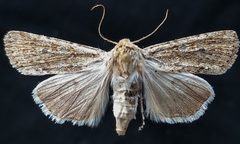
Euxoa aurulenta, the dune , is a noctuid described by Smith in 1888. It is distributed across central and western North America, with active from May to July. The species has a single and is associated with dune grass . The larvae are suspected to feed on beach grasses including Ammophila breviligulata and Calmovilfa longifolia.
Pronunciation
How to pronounce Euxoa aurulenta: /juːkˈsoʊ.ə ˌɔːˈruː.lɛn.tə/
These audio files are automatically generated. While they are not always 100% accurate, they are a good starting point.
Identification
have a wingspan of 35–39 mm. The can be distinguished from similar Euxoa species by its specific association with coastal and inland dune , though detailed morphological diagnostic features are not well documented in available sources.
Images
Habitat
Coastal and inland sand dunes, specifically dominated by dune grasses. In Michigan, specimens have been collected near beach grasses including Ammophila breviligulata and Calmovilfa longifolia.
Distribution
North America from Ontario west to Alberta, Washington, and south to Illinois, Nebraska, Colorado, and Arizona. GBIF records confirm presence in Alberta, Manitoba, and Saskatchewan, Canada.
Seasonality
are on wing from May to July. There is one per year.
Diet
Larvae probably feed on of dune grass. In Michigan, larvae have been collected near the beach grasses Ammophila breviligulata and Calmovilfa longifolia.
Host Associations
- Ammophila breviligulata - probable larval food plantAmerican beachgrass; observed in Michigan
- Calmovilfa longifolia - probable larval food plantPrairie sandreed; observed in Michigan
Life Cycle
One per year. stage not explicitly documented, though Euxoa typically overwinter as larvae or pupae.
Ecological Role
Larval herbivore in dune grass . Specific ecological functions such as nutrient cycling or position are not documented.
Similar Taxa
- Euxoa auxiliarisBoth are Euxoa cutworms, but E. auxiliaris is a widespread agricultural pest with feeding habits, migratory , and different preferences (not dune-specific). E. aurulenta is restricted to dune habitats and is not reported as a crop pest.
- Euxoa mimallonisAnother Euxoa found in North America, but lacks the specific dune grass association and western distribution pattern of E. aurulenta.
Sources and further reading
- BugGuide
- Wikipedia
- GBIF taxonomy match
- iNaturalist taxon
- NCBI Taxonomy
- Tiger Beetles Show Potential for Biocontrol of Red Imported Fire Ants
- Bug Eric: Winter 'pillars
- How Army Cutworm Moths Bounce Between Midwest Heat and Alpine Cool
- Cartref Anghonfensiynol i’r Saerwenynen Eddi Aur - Buglife Blog - Buglife
- An Unconventional Home for the Gold-fringed Mason Bee - Buglife Blog - Buglife
- Bug Eric: My Kind of Fourth of July