
Euxoa albipennis
Grote, 1876
White-striped Dart
Euxoa albipennis is a noctuid first described by Augustus Radcliffe Grote in 1876. It is distributed across southern Canada and the northern United States, with western extending to New Mexico, Arizona, and California. The has a wingspan of 30–35 mm. Larval plants include Oxytropis, Lupinus, Melilotus, Helianthus, Solanum tuberosum, and Zea mays.
Pronunciation
How to pronounce Euxoa albipennis: /juːˈzoʊə ælˈbaɪˌpɛnɪs/
These audio files are automatically generated. While they are not always 100% accurate, they are a good starting point.
Identification
Identification to level within the large Euxoa requires examination of genitalia and comparison with reference specimens. The specific epithet refers to white markings on the wings, but this trait alone is insufficient for reliable identification given the diversity of Euxoa species. Dissection and comparison with type material or verified specimens is necessary for definitive identification.
Images
Appearance
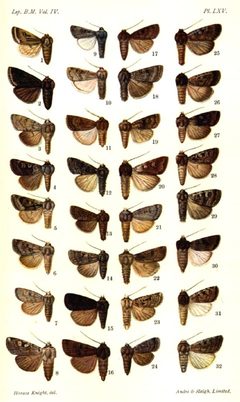
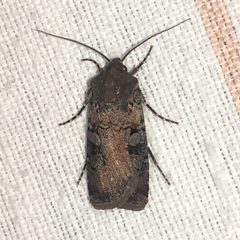
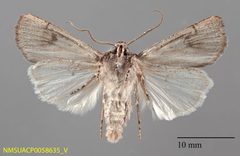
Medium-sized noctuid with wingspan of 30–35 mm. Forewings typically display patterning consistent with the Euxoa , with white markings on the wings (suggested by the specific epithet 'albipennis', meaning 'white-winged'). Hindwings pale. Overall coloration and pattern details require specimen examination for precise description.
Habitat
Occurs in diverse across its broad geographic range, including grasslands, agricultural areas, and open woodlands. Larval plant records suggest association with both native vegetation and cultivated crops.
Distribution
Transcontinental in southern Canada and northern United States. Western extend southward to New Mexico, Arizona, and California. Canadian records include Alberta, Manitoba, and Saskatchewan. United States records include Vermont and other northern states.
Diet
Larvae have been reported feeding on Oxytropis, Lupinus, Melilotus, Helianthus, Solanum tuberosum (potato), and Zea mays (corn). This indicates a broad diet encompassing both native legumes and agricultural crops.
Host Associations
- Oxytropis - larval food plantnative legume
- Lupinus - larval food plantnative legume
- Melilotus - larval food plantintroduced legume
- Helianthus - larval food plantnative sunflower
- Solanum tuberosum - larval food plantcultivated potato
- Zea mays - larval food plantcultivated corn
Life Cycle
Complete with , larva, pupa, and stages. Specific details of , stage, and number of per year are not documented for this .
Ecological Role
Larvae function as herbivores, feeding on both native plants and agricultural crops. The has been documented as a pest of potato and corn, indicating potential economic impact in agricultural systems. likely serve as prey for including bats and birds.
Human Relevance
Documented as a minor agricultural pest based on larval feeding records on potato (Solanum tuberosum) and corn (Zea mays). The is not considered a major pest species compared to some .
Similar Taxa
- Euxoa auxiliarisSimilar size and distribution; distinguished by specific wing pattern details and genitalia . E. auxiliaris is a much more significant agricultural pest known as the .
- Other Euxoa speciesThe Euxoa contains numerous similar-appearing that require genitalia examination for reliable identification. Many share cryptic brown or gray forewing coloration with variable pattern elements.
More Details
Taxonomic note
The specific epithet 'albipennis' (white-winged) refers to a distinctive wing marking, but this character may be variable or require careful interpretation. The was originally described in the Agrotis before transfer to Euxoa.
Data gaps
Detailed , , and ecological studies specific to E. albipennis are lacking in the accessible literature. Most available information is derived from specimen records and plant documentation rather than focused research.
Sources and further reading
- BugGuide
- Wikipedia
- GBIF taxonomy match
- iNaturalist taxon
- NCBI Taxonomy
- Catalogue of Life
- Bug Eric: Winter 'pillars
- How Army Cutworm Moths Bounce Between Midwest Heat and Alpine Cool
- Interactive species ID with advanced software | Blog
- Bug Eric: My Kind of Fourth of July
- species identification | Blog
- Bug Eric: July 2019