
Copablepharon serratigrande
Lafontaine, 2004
Copablepharon serratigrande is a noctuid described by J. Donald Lafontaine in 2004. It belongs to the Copablepharon, a group of sand-verbena moths found in western North America. The epithet "serratigrande" refers to the large serrated features on the male genitalia. This species is part of the diverse Noctuidae , which includes many cryptically colored, moths.
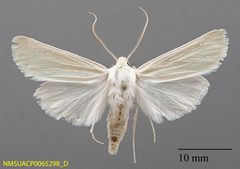
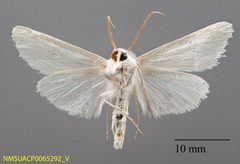
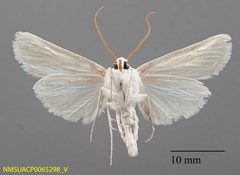
Pronunciation
How to pronounce Copablepharon serratigrande: //koʊˈpæbləfɛˌrɒn sɛˈrætɪˌɡrændi//
These audio files are automatically generated. While they are not always 100% accurate, they are a good starting point.
Identification
Distinguished from by large serrated structures on male genitalia. External likely similar to other Copablepharon ; dissection required for definitive identification. Specific wing pattern differences from related species require examination of type material.
Images
Appearance
As a member of Copablepharon, likely possesses cryptic, dull coloration typical of the . Male genitalia feature large serrated structures, the diagnostic trait referenced in the name. Forewings probably gray-brown with variable patterning for substrate matching.
Habitat
specifics unreported. Related Copablepharon inhabit sandy coastal and interior dune systems, often associated with plants in the Nyctaginaceae .
Distribution
North America. Specific range details beyond continent-level occurrence unconfirmed in available sources.
Host Associations
- Abronia - probable larval Copablepharon strongly associated with sand-verbenas (Abronia spp.); specific for C. serratigrande unconfirmed.
Similar Taxa
- Copablepharon longipenneSimilar external appearance; distinguished by male genitalia structure and geographic distribution.
- Copablepharon fuscum with overlapping range; requires genital dissection for separation.
More Details
Etymology
epithet combines Latin 'serratus' (serrated) and 'grande' (large), referring to the prominent serrated structures on the male genitalia.
Taxonomic History
Described in 2004 by J. Donald Lafontaine during revisionary work on the Copablepharon, which expanded recognized in this group.