
Leucania farcta
(Grote, 1881)
Meadow Wainscot Moth
Leucania farcta, commonly known as the meadow wainscot , is a noctuid moth described by Grote in 1881. It belongs to the Noctuinae and tribe Leucaniini. The species is recorded from North America with 423 observations on iNaturalist. Its MONA/Hodges number is 10441.
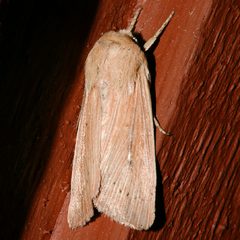
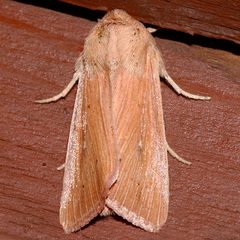
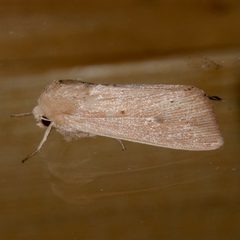
Pronunciation
How to pronounce Leucania farcta: /leʊˈkeɪniə ˈfarkta/
These audio files are automatically generated. While they are not always 100% accurate, they are a good starting point.
Identification
The MONA/Hodges number 10441 provides a unique identifier for this in North American classification. As a member of the Leucania, it shares the general characteristics of wainscot moths, though specific diagnostic features distinguishing it from such as Leucania pseudargyria or Leucania multilinea are not documented in available sources.
Images
Habitat
suggests association with meadow , though specific habitat requirements have not been formally documented.
Distribution
North America. Distribution records from GBIF confirm presence in this region.
Similar Taxa
- Leucania pseudargyriaCongeneric in the same , potentially overlapping in distribution and requiring careful examination for separation.
- Leucania multilineaAnother North American Leucania with which L. farcta may be confused due to shared characteristics.
More Details
Taxonomic History
Originally described as Heliophila farcta by Grote in 1881, later transferred to the Leucania.
Catalogue Information
Accepted status confirmed in Catalogue of Life and GBIF databases.