
Nudorthodes molino
Lafontaine, Walsh & Ferris, 2014
Nudorthodes molino is a small in the Noctuidae, first described in 2014. It is to the southwestern United States, occurring in southeastern Arizona and southwestern New Mexico. The is named after Molino Basin on Mount Lemmon, Arizona, where most were collected. are active during two distinct periods: late spring (May–June) and late summer through early autumn (August–November).


Pronunciation
How to pronounce Nudorthodes molino: /nuːdɔrˈθoʊdiːz moʊˈliːnoʊ/
These audio files are automatically generated. While they are not always 100% accurate, they are a good starting point.
Identification
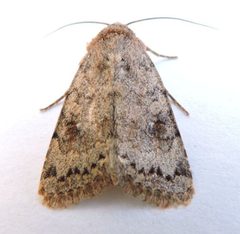
Distinguished from similar Nudorthodes by combination of: pale brown forewing ground color with specific pattern of darker dusting; distinct kidney-shaped spot with dark shading; rounded, pale spot with thin dark outline; and the characteristic subterminal line of pale-buff dots with dark highlighting. The bimodal period (late spring and late summer–autumn) may also aid identification. Genitalia examination may be required for definitive separation from closely related species.
Images
Habitat
Montane and foothill in the Madrean Sky Islands region of the southwestern United States. Occurs in areas with oak and mixed conifer-oak woodland vegetation. The type locality at Molino Basin on Mount Lemmon represents mid-elevation montane forest habitat.
Distribution
to the southwestern United States. Known from southeastern Arizona (including Mount Lemmon in the Santa Catalina Mountains) and southwestern New Mexico. The has a restricted range within the Madrean Sky Islands ecoregion.
Seasonality
have been recorded on wing during two distinct periods: late May to late June, and from late August to early November. This bimodal pattern suggests possible partial bivoltinism or extended period with summer .
Behavior
activity typical of noctuid . Specific such as mating, oviposition, and larval habits remain undocumented.
Human Relevance
Named after Molino Basin on Mount Lemmon, representing a case where scientific commemorates specific geographic localities important for biodiversity documentation. The contributes to documented diversity of the Madrean Sky Islands, a biodiversity hotspot of conservation interest.
Similar Taxa
- Other Nudorthodes speciesSimilar general appearance and shared ; require examination of genitalia and specific wing pattern elements for separation
- Related noctuine moths in tribe EriopyginiShared and tribe characteristics; N. molino distinguished by specific forewing pattern elements and geographic range
More Details
Etymology
The specific epithet 'molino' refers to Molino Basin on Mount Lemmon, Arizona, where most of the type series was collected. This follows the taxonomic tradition of naming after type localities.
Type locality
Molino Basin, Mount Lemmon, Santa Catalina Mountains, Pima County, Arizona, USA
Taxonomic history
Described in 2014 by J. Donald Lafontaine, J. Bruce Walsh, and Clifford D. Ferris based on material from Arizona and New Mexico, representing a relatively recent addition to the North American noctuid fauna.