
Nudorthodes
Lafontaine, Walsh & Ferris, 2014
Species Guides
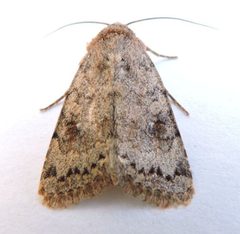
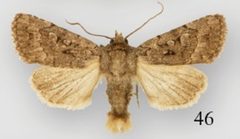
4Nudorthodes is a of noctuid erected in 2014 to accommodate previously placed in the Orthodes-group of genera. The genus is defined by the absence of hairs on the surface, a trait that distinguishes it from related genera. It contains three described species distributed in North America. The name combines Latin 'nudus' (bare) with 'Orthodes', referencing this diagnostic character.

Pronunciation
How to pronounce Nudorthodes: //nuːˈdɔr.θoʊˌdiːz//
These audio files are automatically generated. While they are not always 100% accurate, they are a good starting point.
Identification
The is distinguished from related Orthodes-group genera by the bare (non-setose) surface. -level identification requires examination of genitalia and wing pattern details; N. texana and N. variabilis were transferred from Orthodes, while N. molino was described as new in the same 2014 paper establishing the genus.
Images
Distribution
North America; occur in the United States and likely adjacent regions of Mexico and Canada.
Similar Taxa
More Details
Etymology
The generic name is derived from Latin 'nudus' (meaning bare) plus the name Orthodes, referring to the bare surface that distinguishes these from other Orthodes-group genera.
Type species
Nudorthodes texana (Smith, 1900), originally described as Mamestra texana.
Included species
Nudorthodes molino Lafontaine, Walsh & Ferris, 2014 (Arizona, New Mexico); Nudorthodes texana (Smith, 1900) (southwestern United States, Mexico); Nudorthodes variabilis (Barnes & McDunnough, 1912) (southwestern United States).