
Lacinipolia explicata
McDunnough, 1937
Explicit Arches Moth, Explicit Arches
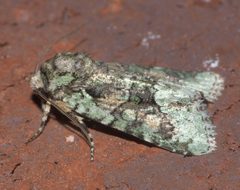
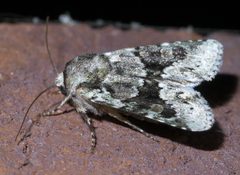
Lacinipolia explicata, commonly known as the Explicit Arches , is a small noctuid moth native to the southeastern United States. have a wingspan of 28–30 mm and are active in two per year, appearing in April and September. The is , with larvae feeding on specific herbaceous plants including clovers and dandelion.

Pronunciation
How to pronounce Lacinipolia explicata: //ləˌsɪnɪˈpoʊliə ɛksplɪˈkeɪtə//
These audio files are automatically generated. While they are not always 100% accurate, they are a good starting point.
Identification
The Explicit Arches is distinguished from other Lacinipolia by the distinct arch-shaped or looped dark markings on the forewings. Within its , species identification typically requires examination of genitalia; visual identification alone is unreliable. The combination of small size (28–30 mm wingspan), gray mottled coloration with reflective , and the southeastern U.S. distribution helps narrow identification. Similar species in the genus Lacinipolia share general appearance and require dissection or molecular analysis for definitive separation.
Images
Habitat
Found in open supporting herbaceous vegetation, including fields, meadows, roadsides, and disturbed areas where plants grow. are attracted to artificial light sources at night.
Distribution
Southeastern United States: from Kentucky and North Carolina south to Florida, and west to Missouri and Texas.
Seasonality
with two periods per year: April (spring ) and September (autumn generation).
Diet
Larvae feed on Trifolium (clovers) and Taraxacum officinale (common dandelion). feeding habits are not documented.
Host Associations
- Trifolium - larval food plantmultiple clover
- Taraxacum officinale - larval food plantcommon dandelion
Life Cycle
Complete with two per year. Larvae feed on herbaceous plants. occurs in soil or leaf litter. emerge in spring and autumn.
Behavior
are and attracted to blacklights. Larvae are presumably ground-dwelling or low-feeding on herbaceous vegetation. Daytime resting posture of adults likely involves pressing flat against tree bark or lichen-covered surfaces for camouflage, as observed in related Lacinipolia .
Ecological Role
Larvae function as herbivores, consuming clovers and dandelions. may serve as prey for including bats and night-flying birds. The contributes to nutrient cycling through larval feeding and subsequent decomposition.
Human Relevance
Not a significant agricultural pest. Larval feeding on clovers and dandelion is incidental and not economically damaging. are occasionally encountered by enthusiasts and in light-trap surveys.
Similar Taxa
- Other Lacinipolia speciesConvergent gray mottled coloration and similar size; genitalia examination required for definitive identification
- General owlet moths (Noctuidae)Similar overall body plan and ; Lacinipolia distinguished by specific wing pattern elements and smaller size
More Details
Taxonomic history
Described by James Halliday McDunnough in 1937. The epithet 'explicata' refers to the explicit, clearly defined arch patterns on the forewings.
Research needs
Detailed , including and larval instar descriptions, pupal characteristics, and nectar feeding , remain undocumented in published literature.