
Elaphria agrotina
Guenée, 1852
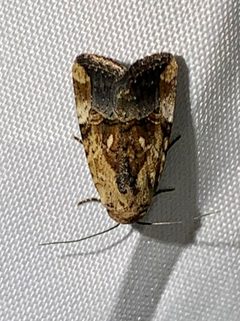
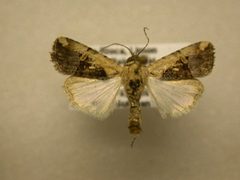
Elaphria agrotina is a small owlet moth in the Noctuidae, described by Guenée in 1852. It has a wingspan of approximately 18 mm. The is notable for its broad distribution across the Americas, ranging from the eastern United States through Central America and the Caribbean to South America. Larvae have been documented feeding on Phaseolus species (legumes).
Pronunciation
How to pronounce Elaphria agrotina: /ɛˈlæfrɪə əˈɡroʊtɪnə/
These audio files are automatically generated. While they are not always 100% accurate, they are a good starting point.
Identification
Distinguished from other Elaphria by a combination of geographic distribution and subtle morphological features; precise diagnostic characters require examination. The small size (18 mm wingspan) and broad trans-American range may help differentiate it from some with more restricted distributions. Genitalia examination is typically required for definitive identification within the .
Images
Appearance
Small with wingspan approximately 18 mm. Specific coloration and pattern details are not well documented in available sources.
Habitat
Specific preferences are not well documented. Based on larval plants and distribution, it likely occurs in areas where Phaseolus grow, including agricultural and disturbed habitats.
Distribution
North America (Maryland, Virginia, Kentucky, Florida, Texas), Central America, Antilles, Cuba, Brazil, and Argentina. Records indicate presence in Rio de Janeiro state, Brazil.
Diet
Larvae feed on Phaseolus (legumes, including common bean). feeding habits are not documented.
Host Associations
- Phaseolus - larval larval food plant
Ecological Role
As a herbivore in larval stages, contributes to energy transfer in . Specific ecological impacts are not documented.
Human Relevance
Potential minor pest of Phaseolus crops, though economic significance is not established in available sources.
Similar Taxa
- Elaphria grataCongeneric with similar ('Grateful Midget'); distinguished by distribution and morphological details
- Other Elaphria species contains multiple small, similar-looking ; -level identification typically requires genitalia examination