
Oligia latruncula
(Denis & Schiffermüller, 1775)
Tawny Marbled Minor
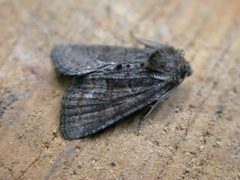
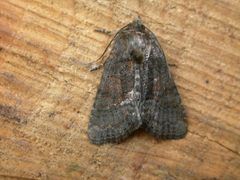
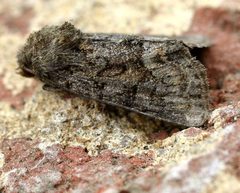
A small noctuid with a wingspan of 24–27 mm, widespread across Europe and Western Asia. It forms part of a difficult with Oligia strigilis and O. versicolor, requiring genitalia examination for reliable identification. The exhibits extensive melanism, with some consisting entirely of all-dark individuals. are active at night and attracted to light and sugar.
Pronunciation
How to pronounce Oligia latruncula: /oʊˈlɪdʒiə ləˈtrʌŋkjʊlə/
These audio files are automatically generated. While they are not always 100% accurate, they are a good starting point.
Identification
Reliable separation from Oligia strigilis (Marbled Minor) and O. versicolor ( Minor) requires examination of genitalia. O. latruncula is usually the smallest of the three, though size ranges overlap. Well-marked individuals may be distinguished by the coppery brown subterminal band versus whitish in similar , but this is unreliable due to frequent melanism and variable markings.
Images
Habitat
Occurs in grassland . In the Alps, found up to 2,000 meters elevation.
Distribution
Europe from northern Scotland and middle Fennoscandia south to central Spain, Sicily, and Greece; east to Western Asia. Also recorded in North America (GBIF).
Seasonality
fly from May to August (British Isles timing); exact timing varies across range.
Diet
Larva feeds internally on stems of various grasses including Calamagrostis and Dactylis.
Host Associations
- Calamagrostis - larval food plantlarva feeds internally on stems
- Dactylis - larval food plantlarva feeds internally on stems
Life Cycle
Overwinters as larva. Larva pupates in a cocoon among grass roots. emerge in late spring to mid-summer.
Behavior
. Attracted to light and sugar.
Ecological Role
Herbivore; larva is a stem-borer in grasses.
Human Relevance
Subject of taxonomic interest due to identification challenges. Occasionally recorded in North America, possibly introduced.
Similar Taxa
- Oligia strigilisExtremely similar external appearance; genitalia examination required for separation. Usually larger with whitish (not coppery brown) subterminal band in well-marked specimens.
- Oligia versicolorExtremely similar external appearance; genitalia examination required for separation. Usually larger than O. latruncula.
More Details
Melanism
Melanism is very common in this ; all-dark specimens constitute 100% of the in some areas, making visual identification impossible without genitalia examination.
Taxonomic History
Originally described as Noctua latruncula by Denis & Schiffermüller in 1775.