Hypocoena inquinata
Guenée, 1852
Tufted Sedge Moth, Sordid Wainscot
Hypocoena inquinata, commonly known as the Tufted or Sordid Wainscot, is a small noctuid native to North America. The has a transcontinental distribution across Canada with southern extensions into the United States. are active during mid-summer, and the larvae are specialized feeders on sedges.
Pronunciation
How to pronounce Hypocoena inquinata: /hʌɪpoʊˈsiːnə ˌɪnkwɪˈneɪtə/
These audio files are automatically generated. While they are not always 100% accurate, they are a good starting point.
Identification
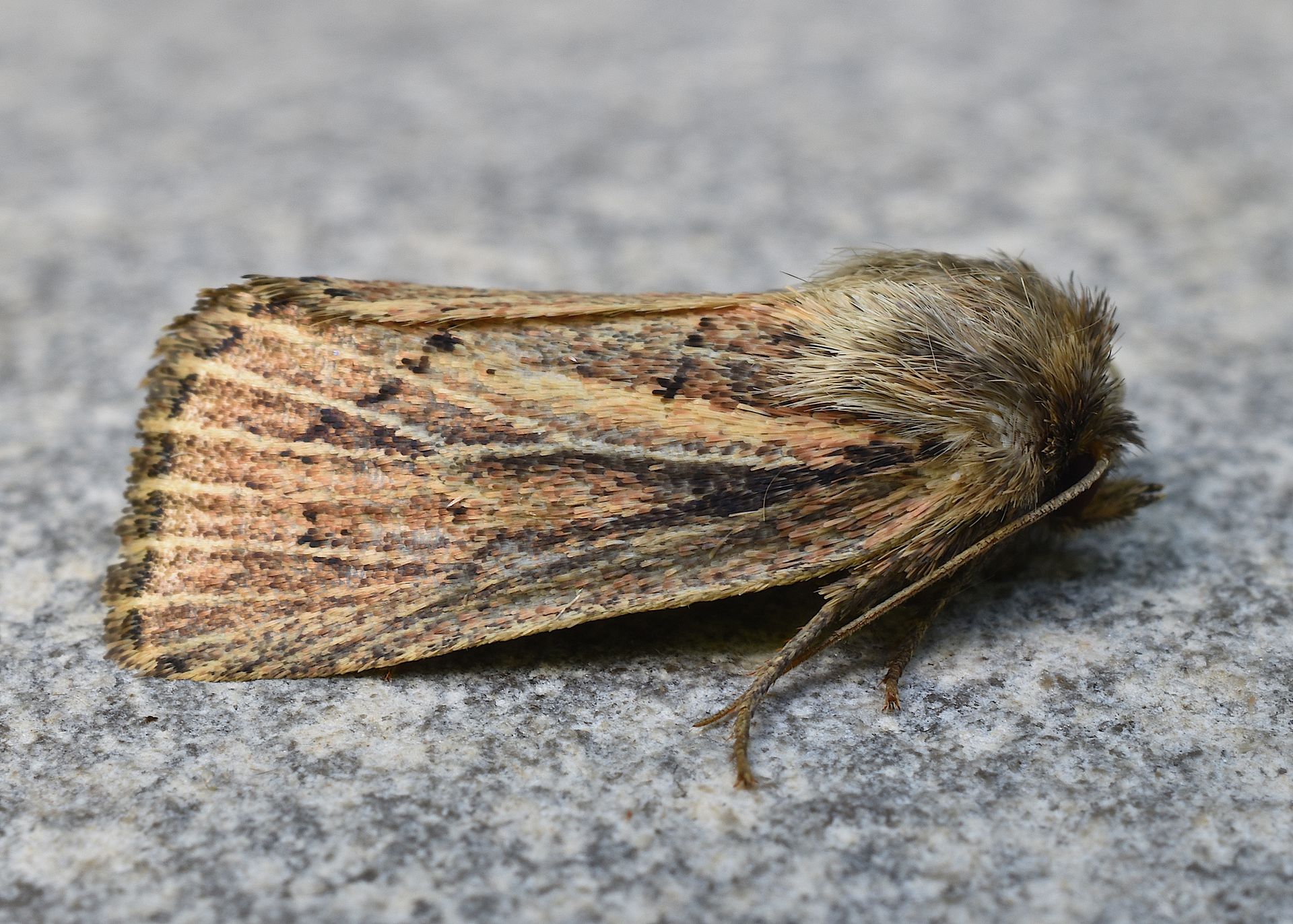
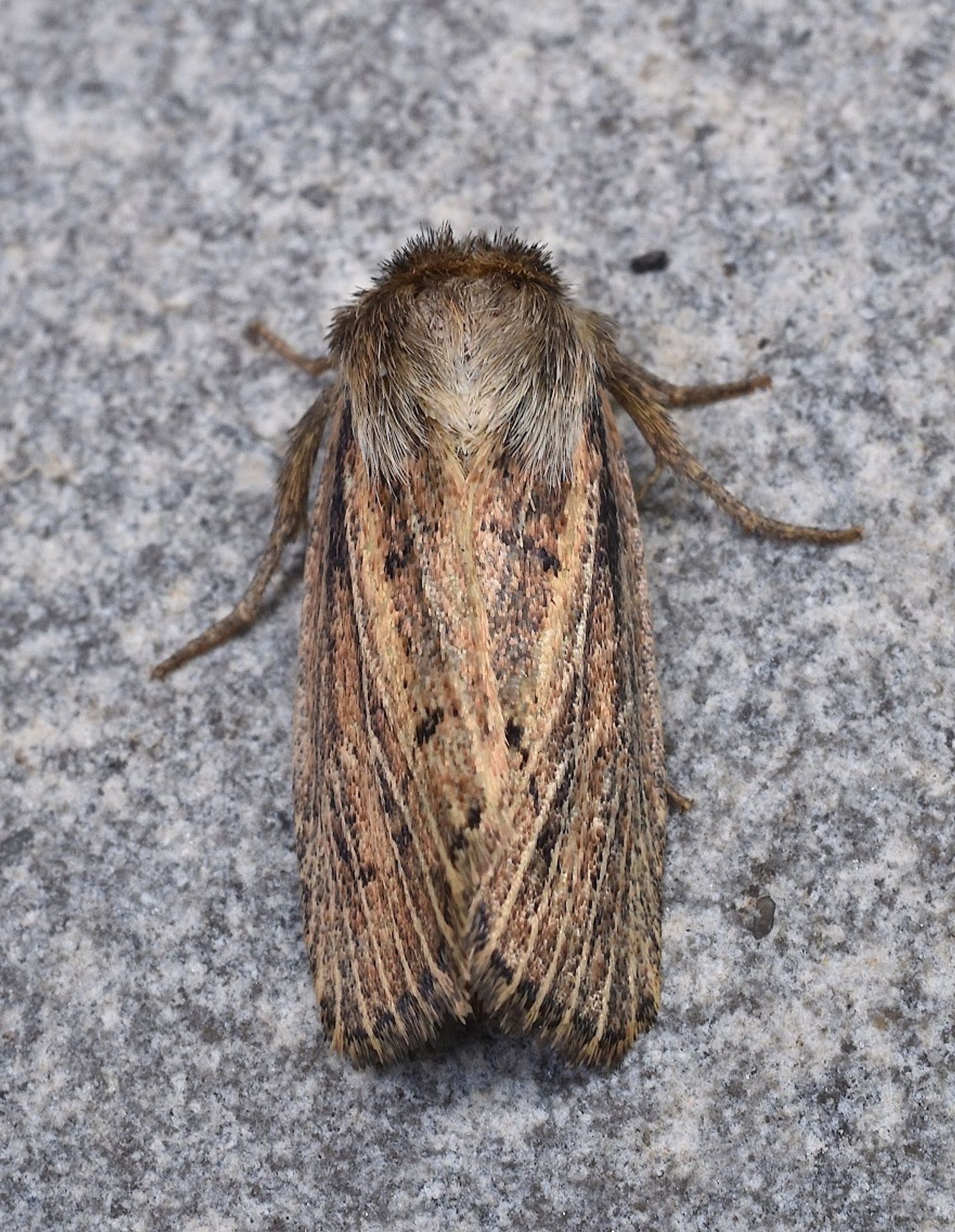
The small size (20–28 mm wingspan), uniformly dull gray-brown forewings with subtle darker markings, and pale hindwings distinguish this from more boldly patterned noctuids. The 'sordid' appearance—lacking clean lines or bright colors—is characteristic. Similar small wainscot moths in the may require genitalia examination for definitive identification.
Images
Appearance
have a wingspan of 20–28 mm. The forewings are dull grayish-brown with subtle darker markings, giving a 'sordid' or dirty appearance that provides camouflage against dried vegetation. The hindwings are paler, typically whitish-gray. The overall coloration is muted and lacks strong pattern contrast.
Habitat
Wetland and marsh where sedges (Carex ) grow, including sedge meadows, fens, wet prairies, and edges of ponds and slow-moving waterways.
Distribution
Transcontinental across Canada from Newfoundland to British Columbia; southward in the eastern United States to Connecticut and Ohio, and in the western United States to Colorado. Records confirmed from Alberta, Manitoba, Saskatchewan, and Vermont.
Seasonality
are active from July to August. One per year ().
Diet
Larvae feed on sedges (Carex ). feeding habits are not documented.
Host Associations
- Carex - larval food plantsedges
Life Cycle
One per year. Larvae feed on sedges; and stage not explicitly documented in available sources.
Behavior
. are attracted to light.
Ecological Role
Larval herbivore in sedge-dominated wetland ; serves as prey for wetland-associated .
Human Relevance
No significant economic or agricultural impact. Occasionally encountered by wetland ecologists and enthusiasts.
Similar Taxa
- Other Hypocoena speciesSimilar small size and muted coloration; may require genitalia dissection for separation
More Details
Original description
First described as Nonagria inquinata by Achille Guenée in 1852; later transferred to Hypocoena.
Nomenclature
The 'Tufted ' refers to both the larval plants (sedges) and the tufted growth habit of many Carex .