
Hydraecia medialis
Smith, 1892
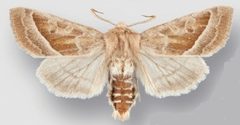
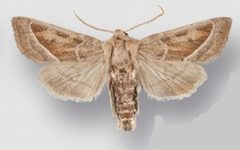
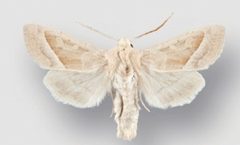
Hydraecia medialis is a noctuid native to western North America. are active from mid-August through September and are characterized by pale gray-tan forewings with a darker, often reddish area and distinctive red-brown or brown and white postmedial line. The inhabits open ponderosa pine forests, drier sagebrush steppe, and juniper woodlands across a range extending from British Columbia to northern New Mexico.
Pronunciation
How to pronounce Hydraecia medialis: /hɪˈdreɪsiə mɪˈdiælɪs/
These audio files are automatically generated. While they are not always 100% accurate, they are a good starting point.
Identification
Distinguished from similar Hydraecia by the combination of pale gray-tan ground color, reddish area on forewings, and the thick red-brown or brown and white postmedial line. The pale-filled spots and pale yellow-tan hindwings with variable gray suffusion provide additional diagnostic features. Range and preference may help separate from eastern .
Images
Habitat
Open ponderosa pine forests, drier sagebrush steppe, and juniper woodlands. Occurs in semi-arid to dry montane environments with open structure.
Distribution
Western North America. East of the Cascade Range: north to the Cariboo region of south-central British Columbia, across the Rocky Mountains in Montana, and spreading north and south on the Great Plains to reach Alberta, the western Dakotas, and northern New Mexico.
Seasonality
on wing from mid-August to September.
Diet
Larvae probably bore into stems and roots of Lupinus .
Host Associations
- Lupinus - probable larval stem and root borer
Similar Taxa
- Hydraecia micaceaSimilar members; H. medialis distinguished by reddish area and specific postmedial line pattern
- Other Hydraecia speciesGeographic separation and specificity help distinguish; eastern generally do not overlap in range