
Hydraecia
Guenée, 1841
Species Guides
6- Hydraecia immanis(Hop Vine Borer Moth)
- Hydraecia medialis
- Hydraecia micacea(Rosy Rustic)
- Hydraecia obliqua
- Hydraecia perobliqua(False Rosy Rustic Moth)
- Hydraecia stramentosa(Figwort Borer Moth)
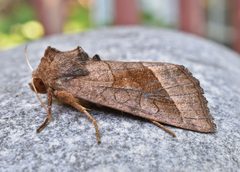
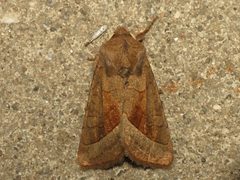
Hydraecia is a of in the Noctuidae, established by Guenée in 1841. The genus comprises approximately 18 described distributed across the northern hemisphere, including well-known species such as Hydraecia micacea (rosy rustic) and Hydraecia petasitis (butterbur). Species in this genus are predominantly associated with wetland and woodland . The larvae are stem borers with broad plant associations.
Pronunciation
How to pronounce Hydraecia: /hɪˈdreɪsɪə/
These audio files are automatically generated. While they are not always 100% accurate, they are a good starting point.
Identification
Members of Hydraecia can be distinguished from related noctuine by a combination of wing pattern and genitalia characters. The genus is placed in the tribe Apameini, and -level identification often requires examination of male genitalia structures. Hydraecia micacea is characterized by its rosy-brown forewing coloration with distinct and stigmata.
Images
Habitat
Wetlands and woodland edges. Hydraecia micacea has been collected from woodland using light traps.
Distribution
Northern hemisphere, with records from Europe (Denmark, Norway, Sweden, UK), Asia (China, Himalayas, Mongolia), and North America (Vermont, USA; introduced to North America in the early 1900s).
Seasonality
active from mid-July until October; one per year.
Diet
Larvae feed on approximately 50 different plant , acting as stem borers in herbaceous plants.
Host Associations
- potatoes - pestdamaging pest
- cereals - pestdamaging pest
- hops - pestdamaging pest
- weeds - herbivorelarval
- Petasites - herbivorelarval ; H. petasitis specific
Life Cycle
(one per year). Larvae are stem borers. Flying period approximately from mid-July until October.
Behavior
Larvae bore into stems of plants. attracted to light traps.
Ecological Role
Herbivore; some are agricultural pests.
Human Relevance
Several are damaging agricultural pests, particularly to potatoes, cereals, and hops. Hydraecia micacea is classed as vulnerable in the UK using IUCN criteria.
Similar Taxa
More Details
Genome sequencing
A high-quality assembly of 562 Mb has been generated for Hydraecia micacea from a female specimen, with 99.98% scaffolded into 32 chromosomal pseudomolecules including W and Z .
Conservation status
Hydraecia micacea is classed as vulnerable in the UK using IUCN criteria.