
Cherokeea attakullakulla
Sullivan & Quinter, 2014
Cherokee Moth
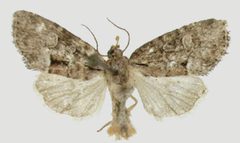
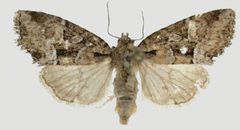
Cherokeea attakullakulla is a small, inconspicuous in the Noctuidae and the sole member of its . The was described in 2014 from specimens collected in the southern Appalachian Mountains of North Carolina and Georgia. It is associated with canebrake dominated by native bamboo species. The specific epithet honors Chief Attakullakulla of the Cherokee Nation, who represented his people in treaty negotiations in 1730, and recognizes the Cherokee as stewards of the region's habitats.
Pronunciation
How to pronounce Cherokeea attakullakulla: /tʃɛrəˈkiə ætəkʌləˈkʊlə/
These audio files are automatically generated. While they are not always 100% accurate, they are a good starting point.
Identification
Distinguished from related apameine by subtle morphological differences recognized by . First specimens were identified as distinct by Dr. John G. Franclemont in 1958, but not formally described until 2014. Identification likely requires examination of genitalia and other microscopic features typical for Noctuidae .
Images
Appearance
Small, drab, and highly inconspicuous . Detailed morphological description not provided in source material.
Habitat
Middle elevations of the southern Appalachian Mountains. Associated with canebrakes— dominated by native bamboo . Found in mountainous regions of western North Carolina and adjacent Georgia.
Distribution
Known from North Carolina (Swain and Macon Counties in the mountains, Rutherford County in the foothills) and Georgia (Rabun County).
Host Associations
- Native bamboo species - associated withCaterpillars either exclusively feed upon or are associated with native bamboo constituting canebrake
Human Relevance
Named in 2014 to honor the Cherokee Nation and Chief Attakullakulla, who traveled to London in 1730 as a Cherokee ambassador. The naming recognizes Cherokee stewardship of Appalachian . The serves as a commemorative symbol of the region's history and conservation heritage.
Similar Taxa
More Details
Discovery history
First specimens recognized as distinct in 1958 by Dr. John G. Franclemont from material collected at Highlands Biological Station, Macon County, North Carolina. No additional specimens recorded for four decades until Dr. J. Bolling Sullivan III encountered the during biological inventories in western North Carolina. Formal description published in 2014 by Sullivan and Eric Quinter in ZooKeys.
Etymology
name Cherokeea honors the Cherokee Nation, inhabitants of the southern Appalachians. Specific epithet attakullakulla honors Chief Attakullakulla (ca. 1700–1780), a respected Cherokee leader who traveled to London in 1730 to represent his people in treaty negotiations with the British Crown.
Canebrake habitat research
Co-author Eric Quinter's decades-long research on southeastern U.S. canebrakes revealed at least two dozen and , many undescribed, with caterpillars associated with native bamboo species. Cherokeea attakullakulla is among these canebrake-associated species.