
Apamea vulgaris
Grote & Robinson, 1866
Common Apamea Moth, common apamea
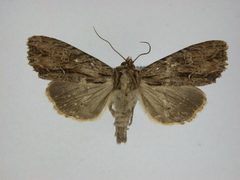
Apamea vulgaris, commonly known as the Common Apamea , is a noctuid moth found in eastern and central North America. are active from May to July and have a wingspan of approximately 39 mm. The belongs to the cutworm moth Apamea, a group known for being difficult to identify due to individual variation and overlapping morphological features among closely related species.
Pronunciation
How to pronounce Apamea vulgaris: /əˈpeɪ.mi ə vʌlˈɡɛə.rɪs/
These audio files are automatically generated. While they are not always 100% accurate, they are a good starting point.
Identification
-level identification of Apamea is challenging due to substantial individual variation within species and extensive overlap in appearance among . Definitive identification of A. vulgaris typically requires examination of genitalia or other specialized morphological features. The species is part of a complex of similar cutworm moths that are often confused in field observations.
Images
Distribution
Eastern and central North America, ranging from Nova Scotia south to Kentucky and west to Kansas. Documented occurrences include Ontario, New York, Pennsylvania, Maryland, and Vermont.
Seasonality
are on the wing from May to July, with peak activity during the early summer months.
Similar Taxa
- Apamea amputatrixAnother cutworm moth in the same that is frequently confused with A. vulgaris due to similar size, coloration, and overlapping range in North America. Both exhibit the characteristic identification challenges of the genus Apamea.
- Other Apamea speciesThe Apamea contains numerous that are notoriously difficult to distinguish from one another based on external alone, often requiring dissection and examination of genitalia for reliable identification.
More Details
Taxonomic History
Originally described as Xylophasia vulgaris by Grote & Robinson in 1866, later transferred to the Apamea.
Identification Challenges
The Apamea is specifically cited in entomological literature as a prime example of that are 'maddeningly difficult to identify' due to individual variation and overlap.
Sources and further reading
- BugGuide
- Wikipedia
- GBIF taxonomy match
- iNaturalist taxon
- NCBI Taxonomy
- Catalogue of Life
- Grasshoppers of Colorado
- Grasshoppers of Colorado
- Bug Eric: National Moth Week Recap for Colorado Springs
- Bug Eric: Wasp Wednesday: Western Yellowjacket
- Bees vs wasps: what's the difference? - Buglife Blog - Buglife
- Coronavirus pandemic | Blog