
Apamea scoparia
Mikkola, Mustelin & Lafontaine, 2000
Faint-spotted Quaker
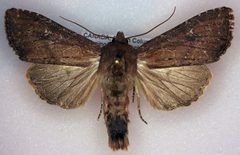
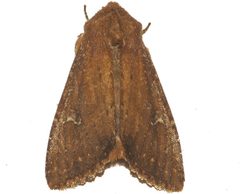
Apamea scoparia is a noctuid described in 2000 by Mikkola, Mustelin, and Lafontaine. It is one of the most common and widespread members of the Apamea in North America. The species is notable for its extensive transcontinental distribution across diverse from the Atlantic to the Pacific.

Pronunciation
How to pronounce Apamea scoparia: //əˈpeɪ.mi.ə skoʊˈpɛər.i.ə//
These audio files are automatically generated. While they are not always 100% accurate, they are a good starting point.
Identification
As a member of the cutworm moth Apamea, A. scoparia likely exhibits the typical Apamea characteristics of dull, cryptic forewing coloration with variable patterning. Specific diagnostic features distinguishing it from are not documented in available sources. The was described relatively recently (2000), suggesting it may have been historically confused with similar Apamea species.
Images
Distribution
Transcontinental across North America: from Newfoundland and Labrador eastward to Alaska and British Columbia westward, and southward to California and Arizona. Documented in Canadian provinces including Alberta, Manitoba, and Saskatchewan, and in the United States including Vermont.
Similar Taxa
- Apamea amputatrixAnother widespread North American Apamea ; both are common and overlap in range, requiring careful examination for separation
- Other Apamea speciesThe Apamea contains many morphologically similar cutworm moths that are difficult to distinguish without detailed examination
More Details
Taxonomic history
The was formally described in 2000 by Kauri Mikkola, Tomas Mustelin, and J. Donald Lafontaine, making it a relatively recent addition to the described North American fauna. Its late description suggests it was previously overlooked or confused with related species.
Common name origin
The 'Faint-spotted Quaker' likely refers to the subtle spotting pattern on the forewings and the group's association with the 'Quaker' common name tradition for certain noctuid .