
Apamea plutonia
Grote, 1883
Dusky Apamea Moth, Dusky Quaker
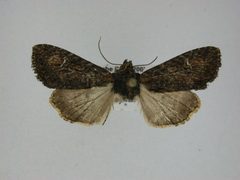
Apamea plutonia, known as the Dusky Apamea or Dusky Quaker, is a small noctuid moth native to northern North America. First described by Grote in 1883, it is characterized by its very dark, nearly black forewings and forewing length of 16–17 mm. The occurs primarily in regions with scattered extending southward. Its larvae are cutworms that feed on grasses.
Pronunciation
How to pronounce Apamea plutonia: /əˈpeɪmiə pluˈtoʊniə/
These audio files are automatically generated. While they are not always 100% accurate, they are a good starting point.
Identification
The extremely dark, nearly black forewings distinguish this from most other Apamea, which typically show more patterned or lighter brown coloration. The small size (16–17 mm forewing length) and distribution provide additional context. Definitive identification may require dissection or genital examination due to similarity with other dark noctuids.
Images
Appearance
Forewing length 16–17 mm. Forewings very dark brown, nearly black. Hindwings not described in sources.
Habitat
forest regions; scattered records from grassland and prairie in southern parts of range. Associated with wetland edges and cottonwood groves in some locations.
Distribution
Native to northern North America. Core range spans Canadian regions: Alberta, Manitoba, Saskatchewan. Disjunct occurrences south to New Mexico and Pennsylvania in the United States. Distribution records from GBIF confirm presence in Vermont.
Diet
Larva feeds on grasses. diet not documented.
Life Cycle
larval stage. Specific developmental timing and number of per year not documented.
Behavior
attracted to light. No other documented.
Ecological Role
Larva functions as a grass-feeding herbivore. habit suggests soil-surface feeding that may influence grassland vegetation structure.
Human Relevance
No documented economic or agricultural significance. Occasionally encountered by enthusiasts at light stations.
Similar Taxa
- Apamea amputatrixSimilar size and noctuid ; distinguished by yellow in larva and presumably different patterning
- Other Apamea speciesMost Apamea show lighter brown or more distinctly patterned forewings; A. plutonia is notably darker