
Apamea perpensa
Grote, 1881
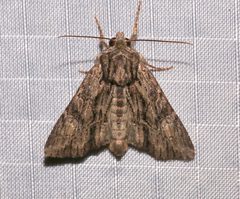
Apamea perpensa is a noctuid described by Augustus Radcliffe Grote in 1881. It belongs to the cutworm moth Apamea, a group known for being taxonomically challenging due to high intraspecific variation and overlapping morphological traits among . The species occurs in North America. Like other members of the Apamea genus, it is likely and attracted to light sources, though specific behavioral and ecological details remain poorly documented.
Pronunciation
How to pronounce Apamea perpensa: //əˈpeɪ.mi.ə pərˈpɛn.sə//
These audio files are automatically generated. While they are not always 100% accurate, they are a good starting point.
Identification
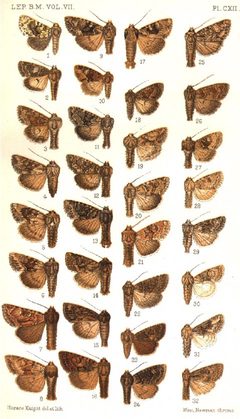
As a member of the Apamea, A. perpensa is difficult to distinguish from without detailed examination. Apamea generally exhibit subtle variation in forewing pattern, ground color, and spot configuration. Positive identification typically requires reference to original species descriptions, genital dissection, or comparison with vouchered specimens. The species was described from specimens collected in the western United States.
Images
Distribution
North America. The was described from western North American material, though precise range boundaries are not well established in available sources.
Similar Taxa
- Apamea amputatrixAnother North American Apamea with which A. perpensa may be confused; both share the 's characteristic cryptic forewing patterns and require careful examination for separation.
- Other Apamea speciesThe Apamea contains numerous morphologically similar that overlap in distribution and appearance, making field identification to species level unreliable without specialized knowledge or dissection.