
Apamea dubitans
Walker, 1856
Doubtful Apamea, Doubtful Apamea Moth
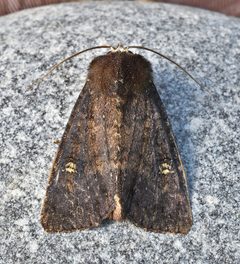
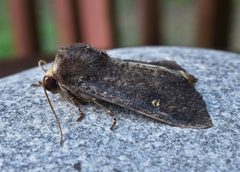
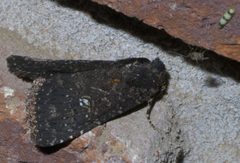
Apamea dubitans, commonly known as the doubtful apamea or doubtful apamea , is a noctuid moth described by Walker in 1856. It occurs widely across North America. have a wingspan of approximately 40 mm and are active from June through September. The species is part of a taxonomically challenging where identification often requires careful examination.
Pronunciation
How to pronounce Apamea dubitans: /əˈpeɪ.mi.ə ˈduː.bɪ.tænz/
These audio files are automatically generated. While they are not always 100% accurate, they are a good starting point.
Identification
Identification to within the Apamea is difficult due to substantial individual variation and overlapping morphological characters among species. Apamea dubitans is part of a group of cutworm moths that require expert examination for reliable determination. The 'dubitans' (meaning 'doubting') reflects this taxonomic uncertainty.
Images
Habitat
Specific associations are not well documented. As a grass-feeding , it likely occurs in grassland, prairie, and open habitats where larval plants are present. Observations include heavily grazed prairie with wetland oases.
Distribution
Widely distributed across North America. Confirmed records include Manitoba, Canada and Vermont, United States. The occurs broadly across the continent.
Seasonality
are on wing from June to September, with exact timing varying by location. This represents a typical single- summer pattern for northern noctuid .
Diet
Larvae feed on various grasses. Specific grass consumed have not been documented in available sources.
Ecological Role
Larval stage functions as a primary consumer feeding on grasses. are and attracted to artificial light sources.
Human Relevance
No significant documented economic or ecological impact. The is encountered by enthusiasts during light-trapping events. Like other Apamea species, larvae may occasionally be found in turf or agricultural settings but are not considered major pests.
Similar Taxa
- Apamea amputatrixAnother yellow-headed cutworm moth in the same with similar appearance and ; both require careful examination for separation
- Other Apamea speciesThe contains numerous similar with overlapping morphological characters and individual variation, making visual identification challenging
More Details
Taxonomic difficulty
The specific epithet 'dubitans' reflects the historical uncertainty in identifying this . The Apamea as a whole is noted as 'maddeningly difficult' to identify due to individual variation and overlapping characters between species.