Apamea burgessi
Morrison, 1874
Burgess' Apamea
Species Guides
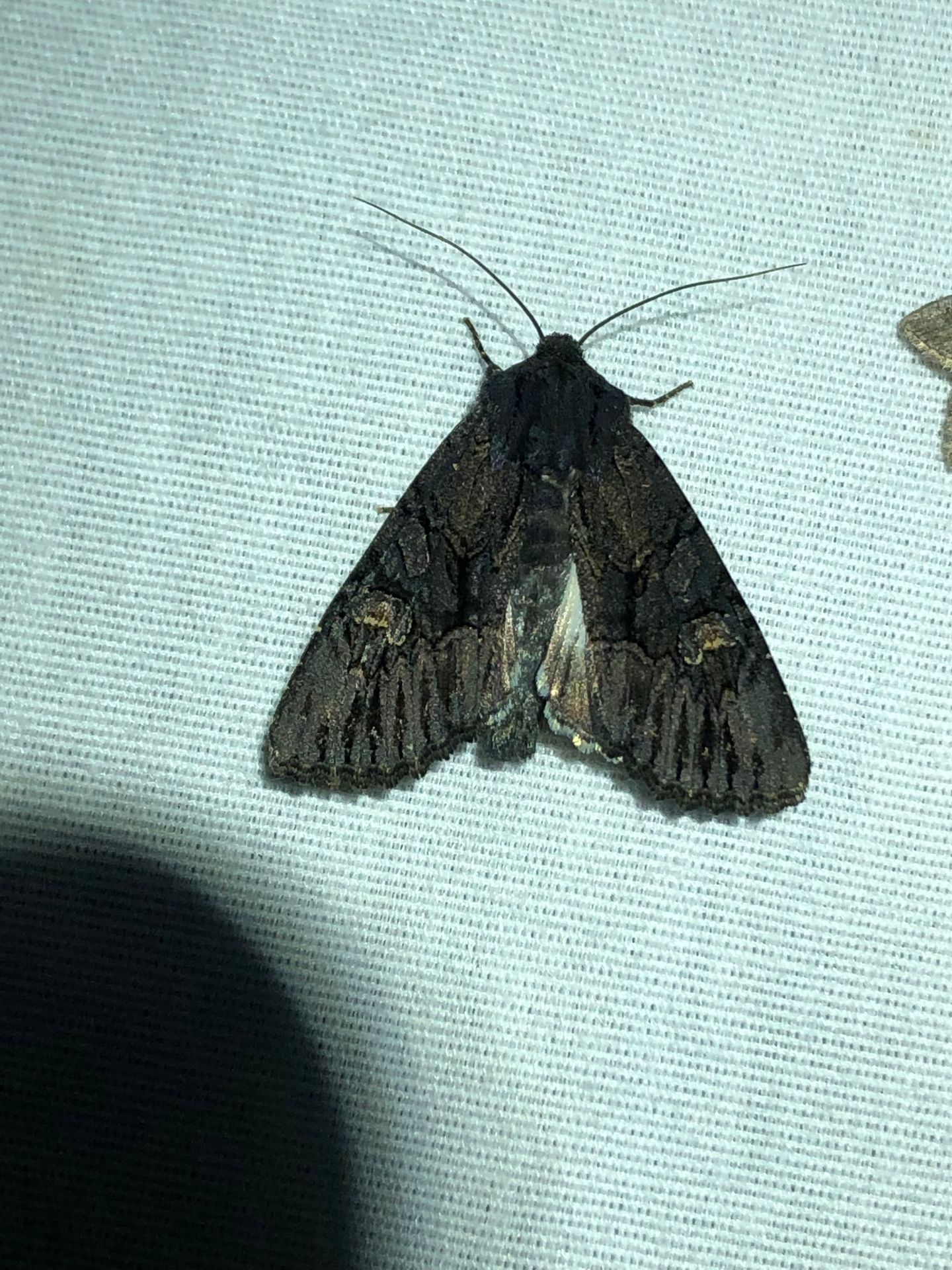
1Apamea burgessi is a noctuid native to central North America, occurring throughout the Great Plains and Great Basin regions with a disjunct on the East Coast. The has a wingspan of 38–40 mm and exhibits streaked tan and gray forewings with white hindwings. are active in late summer and early autumn, flying during September and October. The species was first described by Morrison in 1874 and includes three recognized .
Pronunciation
How to pronounce Apamea burgessi: /əˈpeɪmiə ˈbɜrdʒəsi/
These audio files are automatically generated. While they are not always 100% accurate, they are a good starting point.
Identification
Distinguished from other Apamea by the combination of streaked tan and gray forewings with white hindwings. The species belongs to the taxonomically challenging Apamea, where individual variation and overlapping appearances with complicate identification. Confirmation may require examination of genitalia or other diagnostic characters not visible in standard field observations.
Images
Appearance
Wingspan 38–40 mm. Forewing streaked tan and gray; hindwing white.
Habitat
Found in prairie and grassland of the Great Plains and Great Basin regions. The disjunct East Coast occupies coastal environments. Specific microhabitat preferences for larvae and are not documented in available sources.
Distribution
Native to central North America. Core range extends throughout the Great Plains and Great Basin, from Alberta and Saskatchewan south to Texas. Disjunct present on the East Coast of the United States. Distribution records confirm presence in Alberta and Saskatchewan, Canada.
Seasonality
season occurs in September and October. Larval not documented.
Behavior
are and attracted to artificial light sources. Specific behavioral patterns including mating, oviposition, and larval habits are not documented.
Similar Taxa
- Other Apamea speciesMembers of Apamea are notoriously difficult to distinguish visually due to individual variation and overlapping morphological characters; A. burgessi is separated by the specific combination of streaked tan/gray forewings and white hindwings, though confirmation may require dissection