
Achatodes zeae
Harris, 1841
Elder Shoot Borer Moth, Spindle Worm
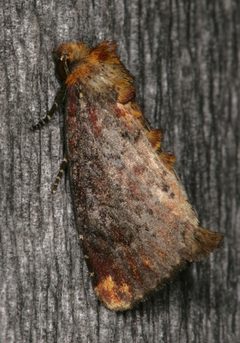
Achatodes zeae, known as the elder shoot borer or spindle worm, is a noctuid moth whose larvae bore into the shoots of elder bushes (Sambucus nigra). The was first described in 1841 and gained agricultural attention in 1927 following an in Wisconsin. Its spans approximately one year, with extended dormancy and larval development focused on elder vegetation.

Pronunciation
How to pronounce Achatodes zeae: //ˈækətoʊdiːz ˈziːiː//
These audio files are automatically generated. While they are not always 100% accurate, they are a good starting point.
Identification
Larvae are known as "spindle worms" and can be found boring within elder shoots; are noctuid with typical characteristics. Specific diagnostic features for distinguishing A. zeae from related Achatodes are not documented in available sources.
Images
Habitat
Associated with stands of common elder (Sambucus nigra), particularly in areas with dense shrub growth. Larvae inhabit the internal tissues of living and dead elder shoots.
Distribution
North America; recorded from the United States including Wisconsin and Vermont. The 1927 in Wisconsin suggests established in the upper Midwest.
Seasonality
active in July and August. hatch approximately 9 months after laying, with larval development continuing through winter and spring. Larvae complete development by mid-June, when they pupate.
Diet
Larvae feed on leaves of elder (Sambucus nigra) upon hatching, then move into lateral and ground shoots of the same plant.
Host Associations
- Sambucus nigra - larval common elder; larvae bore into shoots and feed on internal tissues
Life Cycle
laid in summer (July-August) enter extended dormancy, hatching after approximately 9 months. Young larvae feed on leaves before tunneling into shoots. As larvae mature, they move to ground shoots and feed upward. Fully developed larvae bore into dead canes to pupate in mid-June, completing a cycle.
Behavior
Larvae exhibit stem-boring , creating tunnels in elder shoots that can weaken or kill branches. They show progressive movement from leaf feeding to lateral shoots, then to ground shoots as they develop.
Ecological Role
As a stem borer, larvae may influence elder bush growth form and potentially serve as a food source for woodpeckers or other that excavate infested stems. can cause localized damage to elder stands.
Human Relevance
Known primarily as a pest of ornamental elder bushes; the 1927 Wisconsin drew attention to its potential for causing shoot dieback. Not a significant agricultural pest of crop plants.
Similar Taxa
- Other Achatodes speciesCongeneric may share similar associations and ; precise identification requires examination of genitalia or other subtle characters not covered in general sources.
More Details
Taxonomic history
Originally described as Gortyna zeae by Harris in 1841, later transferred to Achatodes. The epithet 'zeae' (meaning 'of corn') appears to be a misnomer, as the species is not associated with maize but with elder.
Common name origin
"Spindle worm" refers to the larval form and its elongated shape within bored shoots; the name predates modern understanding of its specific association with elder rather than corn.