
Schinia tertia
(Grote, 1874)
Third Flower Moth
Schinia tertia is a small noctuid native to western North America. have a wingspan of approximately 25 mm and are active from April to October in two per year. The is notable for its specialized larval diet on flowering plants in three : Ericameria, Isocoma pluriflora, and Liatris.
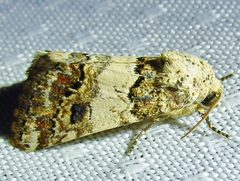
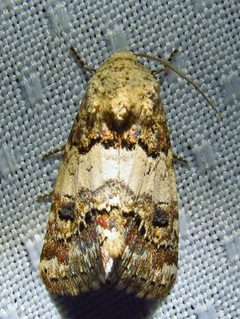
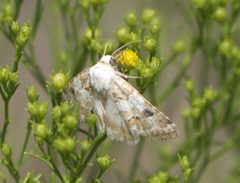
Pronunciation
How to pronounce Schinia tertia: //ˈskɪniə ˈtɜːrʃiə//
These audio files are automatically generated. While they are not always 100% accurate, they are a good starting point.
Identification
Belongs to the Schinia, which contains at least 123 in North America north of Mexico. Species-level identification requires examination of wing pattern details; the specific epithet 'tertia' (Latin for 'third') may reference pattern elements. Distinguishable from other Schinia species by geographic range and plant associations. active during both day and night; some Schinia species are flower visitors.
Images
Appearance
Small with wingspan of approximately 25 mm. Wing pattern and coloration typical of the Schinia, which are known for colorful and often flower-matching appearances. Detailed not explicitly described in available sources.
Habitat
Associated with supporting its larval plants: Ericameria (rabbitbrush), Isocoma pluriflora (rayless goldenrod), and Liatris (blazing star or gayfeather). These plants occur in open, often dry or semi-arid environments across the western United States.
Distribution
Western United States from Minnesota and Illinois south to Texas, west to California, and north to Idaho. Range spans the Great Plains, Rocky Mountain region, and western intermountain areas.
Seasonality
on wing from April to October. Two per year ().
Diet
Larvae feed on flowers and developing seed pods of Ericameria, Isocoma pluriflora, and Liatris. feeding habits not explicitly documented; related Schinia visit flowers for nectar.
Host Associations
- Ericameria - larval flowers and seed pods consumed
- Isocoma pluriflora - larval flowers and seed pods consumed
- Liatris - larval flowers and seed pods consumed
Life Cycle
with two per year. Larvae feed on plant flowers and seed pods. details not documented. stage not explicitly stated.
Behavior
are active from April to October. Like other Schinia , likely rests on or near plant flowers where coloration provides camouflage. Some are ; this species may share this trait but also occurs at light traps at night.
Ecological Role
Larval herbivore specializing on flowers and seeds of Asteraceae plants. Potential as . Part of the diverse noctuid fauna of western North American grasslands and shrublands.
Human Relevance
No significant documented economic impact. Contributes to biodiversity of western North American fauna. May serve as for healthy of its specialized plants.
Similar Taxa
- Other Schinia species contains 123+ North American with similar size, wing shape, and flower-associated . Requires detailed wing pattern examination for differentiation.
- Schinia jaguarinaAnother western North American Schinia with flower-mimicking appearance, but associated with different plants and with distinctive jaguar-spotted wing pattern.
More Details
Taxonomic history
Originally described as Tamila tertia by Grote in 1874; later transferred to Schinia.
Research opportunities
Detailed studies of , , and precise plant relationships remain limited. The ' cycle in relation to host plant flowering phenology warrants investigation.
Sources and further reading
- BugGuide
- Wikipedia
- GBIF taxonomy match
- iNaturalist taxon
- NCBI Taxonomy
- Catalogue of Life
- Bug Eric: Wasp Wednesday: Not Wasp VIII
- Catch a Glimpse of Caterpillars During National Moth Week
- Bug Eric: White Prairie Clover: An Awesome Blossom
- Bug Eric: Remembering National Moth Week 2018
- Cylindera cursitans (Ant-like Tiger Beetle) in Arkansas | Beetles In The Bush
- Cicindela scutellaris lecontei x scutellaris unicolor intergrades in southeast Missouri | Beetles In The Bush