Schinia roseitincta
Harvey, 1875
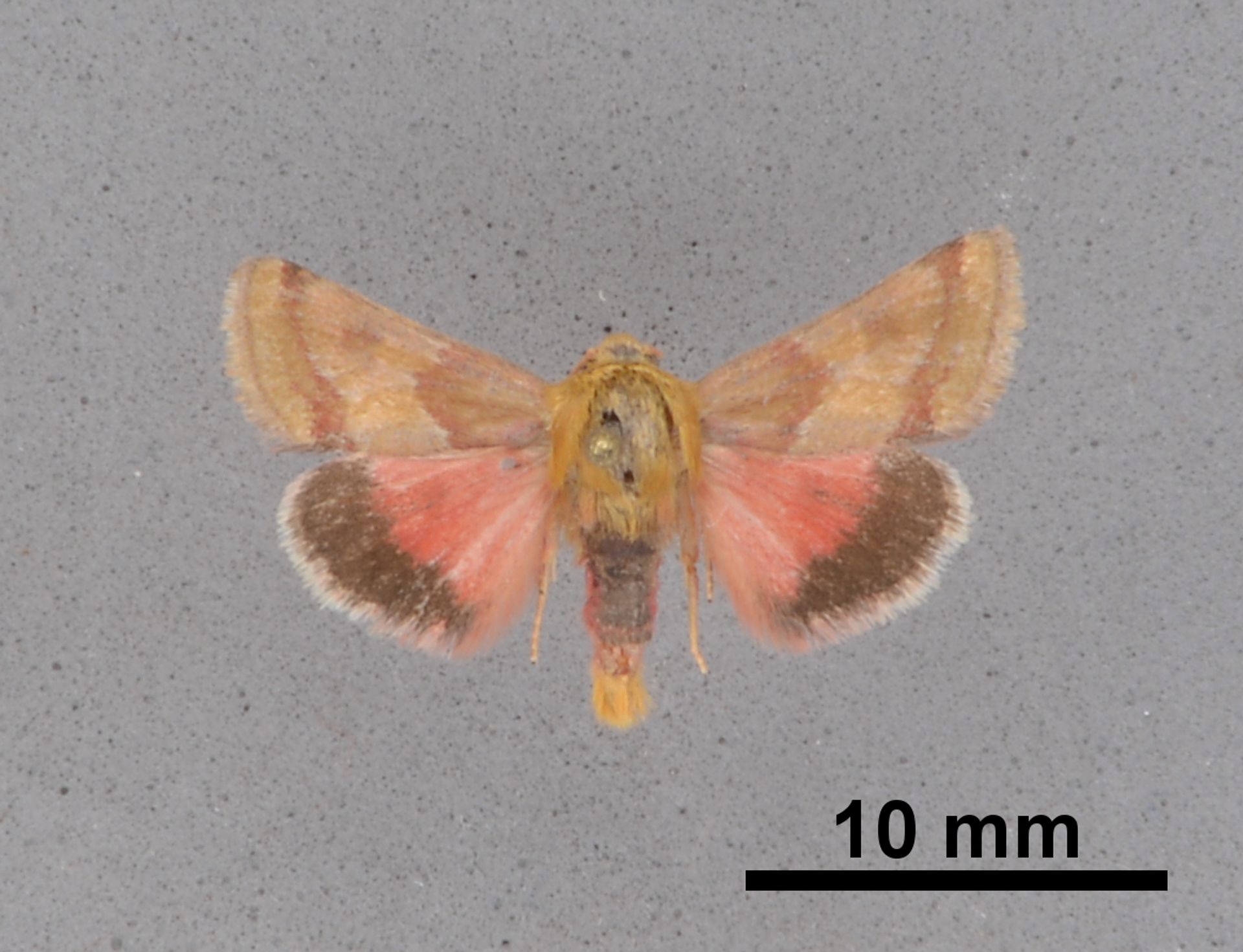
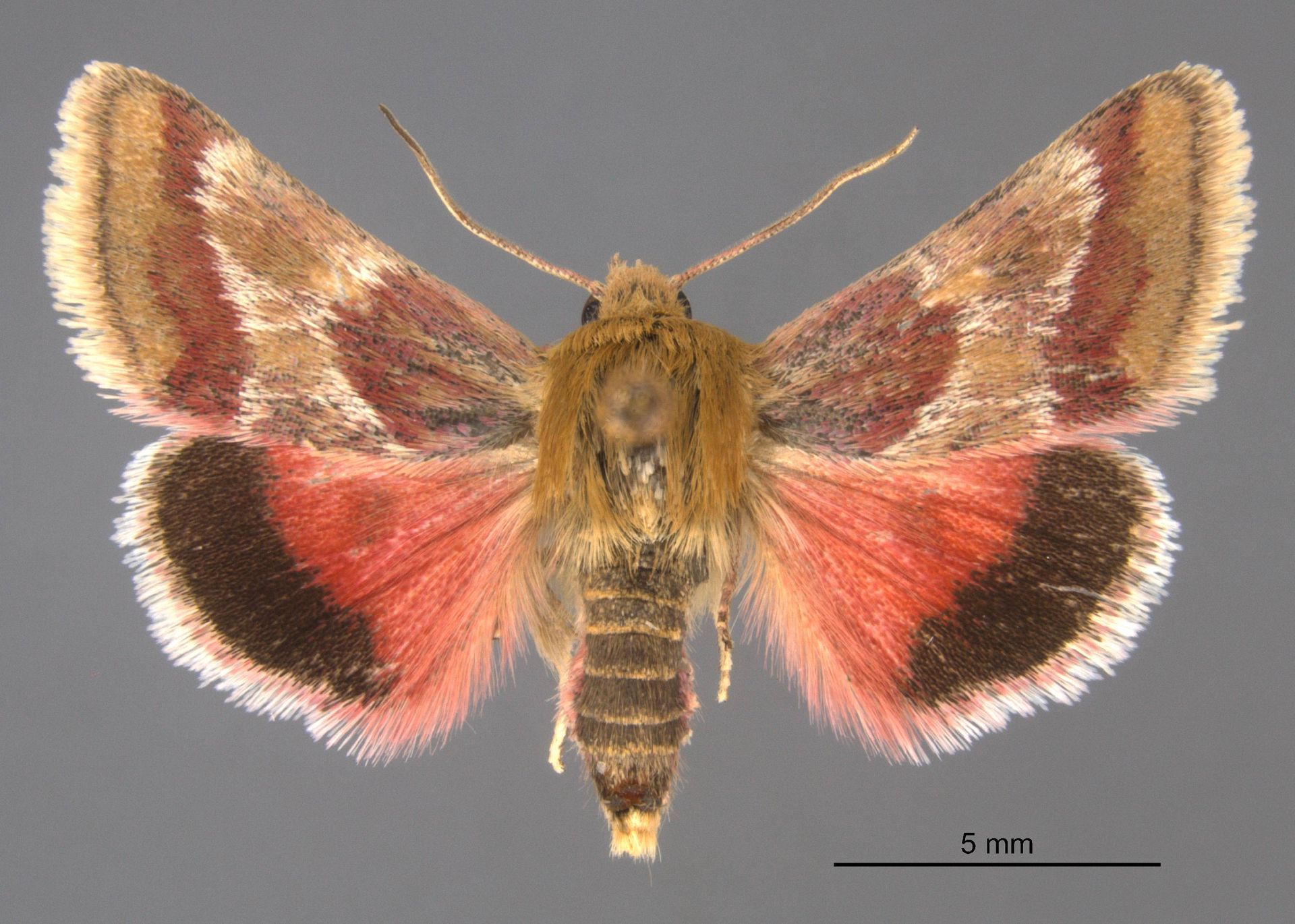
Schinia roseitincta is a small noctuid described by Leon F. Harvey in 1875. It is distributed across the northern United States and Canada, with records from Alberta, Manitoba, and Saskatchewan. The has a wingspan of approximately 20 mm. Its larvae feed specifically on Tetraneuris acaulis, a herb in the sunflower .
Pronunciation
How to pronounce Schinia roseitincta: /ˈskiːniə ˌroʊzeɪˈtɪŋktə/
These audio files are automatically generated. While they are not always 100% accurate, they are a good starting point.
Identification
The can be distinguished from other Schinia species by its combination of small size (20 mm wingspan), geographic distribution in the northern United States and Canada, and association with Tetraneuris acaulis as a larval . Precise identification likely requires examination of genitalia or reference to original species description.
Images
Appearance
Small with wingspan approximately 20 mm. Specific coloration and pattern details are not documented in available sources.
Habitat
Associated with supporting its larval plant Tetraneuris acaulis, which grows in dry, open areas including prairies and rocky slopes. The has been collected in gypsum-capped mesa environments and shortgrass prairie regions.
Distribution
Northern United States and Canada. Specific Canadian provincial records include Alberta, Manitoba, and Saskatchewan. The has been documented in Oklahoma, suggesting a broader Great Plains distribution than initially described.
Seasonality
activity period is not explicitly documented. Based on related Schinia and collection patterns, likely active during summer months when plant is in flower.
Diet
Larvae feed on Tetraneuris acaulis (stemless hymenoxys), a herb in the Asteraceae . feeding habits are not documented.
Host Associations
- Tetraneuris acaulis - larval herb in Asteraceae; larvae feed on flowers and seed pods
Life Cycle
Complete with , larva, pupa, and stages. Larvae feed on plant flowers and seed pods. Specific details of site and stage are not documented.
Behavior
are and attracted to light. Specific behavioral details beyond this are not documented.
Ecological Role
As a herbivore, larvae contribute to seed and floral herbivory on Tetraneuris acaulis. may serve as prey for and as minor if they visit flowers for nectar.
Human Relevance
Collected by lepidopterists; the Schinia is popular among enthusiasts. No economic or agricultural significance is documented.
Similar Taxa
- Schinia jaguarinaSimilar and flower-associated , but distinguished by different plant associations and geographic range
- Other Schinia speciesMany Schinia are small, colorful noctuids with specific plant associations; precise identification requires detailed morphological examination
More Details
Taxonomic Note
Originally described as Lygranthoecia roseitincta before transfer to Schinia. The is part of the diverse Heliothinae , many of which exhibit tight associations with Asteraceae plants.
Collection History
A lepidopterist from Denver was observed collecting in the Gloss Mountains area of Oklahoma in 2013, specifically targeting Schinia , indicating ongoing interest in this among collectors.
Sources and further reading
- BugGuide
- Wikipedia
- GBIF taxonomy match
- iNaturalist taxon
- NCBI Taxonomy
- Catalogue of Life
- Bug Eric: Wasp Wednesday: Not Wasp VIII
- Catch a Glimpse of Caterpillars During National Moth Week
- Bug Eric: White Prairie Clover: An Awesome Blossom
- Bug Eric: Remembering National Moth Week 2018
- Bug Eric: October 2018
- 2013 Oklahoma Collecting Trip iReport | Beetles In The Bush