
Schinia obscurata
Strecker, 1898
Obscure Schinia Moth, Erigeron Flower Moth
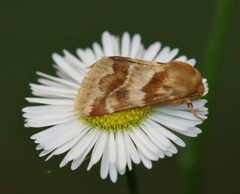
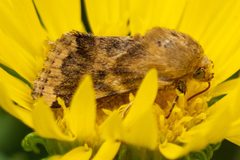
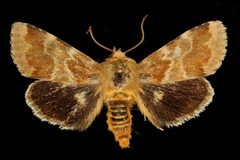
Schinia obscurata is a noctuid in the Heliothinae, commonly known as the obscure schinia moth or Erigeron flower moth. It is one of approximately 123 North American in the Schinia, a group noted for often colorful that frequently rest on or near their plant flowers. The species is distributed across central and eastern North America, with larvae that specialize on Erigeron species.
Pronunciation
How to pronounce Schinia obscurata: /ˈskiː.ni.ə ɒbˈskjʊə.rɑː.tə/
These audio files are automatically generated. While they are not always 100% accurate, they are a good starting point.
Identification
Members of the Schinia are typically small to medium-sized noctuid with relatively broad wings and often striking color patterns. Many in this genus are and rest on the flowers of their plants, where their coloration provides camouflage. Schinia obscurata specifically may be distinguished from by association with its Erigeron host plants and its particular geographic range, though detailed morphological diagnostic features require examination. The two recognized —S. o. obscurata and S. o. tanena—differ in distribution and possibly in subtle morphological traits.
Images
Habitat
supporting Erigeron , which serve as larval plants. Based on the documented distribution, this includes prairie, open woodland, and disturbed habitats across the Great Plains and eastern North America where fleabane species occur.
Distribution
North America: Ontario and Quebec southward through the central and eastern United States. Documented from Illinois, New Jersey, South Carolina, Wisconsin, Kansas, Montana, Nebraska, North Dakota, Oklahoma, and Texas. The S. o. tanena has a more restricted distribution.
Diet
Larvae feed on Erigeron (fleabanes). feeding habits are not documented in available sources.
Host Associations
- Erigeron - larval plantLarvae feed on in this ; specific Erigeron species not documented in available sources
Behavior
in the Schinia are frequently and visit flowers for nectar, though some are also attracted to lights at night. Larvae feed on flowers and developing seed of their plants.
Ecological Role
As a herbivore on Erigeron, the larvae contribute to seed and plant . may serve as when visiting flowers for nectar. The is part of the diverse noctuid fauna that supports higher including and predatory insects.
Human Relevance
Minor interest to lepidopterists; the Schinia is popular among collectors due to the often colorful and patterned . No significant economic or agricultural impact documented.
Similar Taxa
- Other Schinia speciesApproximately 123 in North America; many share similar size, wing shape, and flower-visiting . Identification to species often requires examination of genitalia or association with specific plants.
- Schinia jaguarinaAnother Schinia that visits flowers, but associated with different plants (including Dalea) and with distinct color pattern.
More Details
Subspecies
Two recognized: Schinia obscurata obscurata (nominate form) and Schinia obscurata tanena Strecker, 1898. The latter was described by Strecker in the same publication as the .
Taxonomic Note
The 'Erigeron Flower ' reflects the larval plant association and is increasingly used in preference to 'Obscure Schinia Moth'.
Sources and further reading
- BugGuide
- Wikipedia
- GBIF taxonomy match
- iNaturalist taxon
- NCBI Taxonomy
- Catalogue of Life
- Bug Eric: Wasp Wednesday: Not Wasp VIII
- Catch a Glimpse of Caterpillars During National Moth Week
- Bug Eric: White Prairie Clover: An Awesome Blossom
- Bug Eric: Remembering National Moth Week 2018
- Bug Eric: October 2018
- 2013 Oklahoma Collecting Trip iReport | Beetles In The Bush