
Schinia nundina
Drury, 1773
Goldenrod Flower Moth
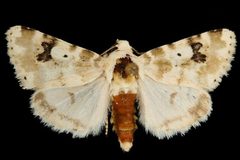
Schinia nundina, commonly known as the goldenrod flower , is a noctuid moth native to eastern and central North America. The was first described by Dru Drury in 1773. are typically encountered in late summer and early autumn when their plants are in bloom. The species has one per year.


Pronunciation
How to pronounce Schinia nundina: //ˈskiː.ni.ə ˈnun.di.nə//
These audio files are automatically generated. While they are not always 100% accurate, they are a good starting point.
Images
Habitat
Found in open where plants Aster and Solidago occur, including prairies, meadows, fields, and roadsides.
Distribution
Eastern and central North America, from Minnesota to southern Ontario and Nova Scotia, south to central Florida and southern Texas. Documented in Arizona, Kansas, Nebraska, New York, Maryland, Oklahoma, and South Carolina.
Seasonality
active late summer to early autumn, corresponding with goldenrod and aster bloom periods. One per year.
Diet
Larvae feed on flowers and developing seeds of Aster and Solidago (goldenrod). feeding habits not documented in available sources.
Host Associations
- Aster - larval larvae feed on flowers
- Solidago - larval larvae feed on flowers; references this
Life Cycle
(one per year). Larval development occurs on plant flowers and seed . likely occurs in soil, though specific details not documented.
Similar Taxa
- Other Schinia species Schinia contains over 120 North American , many with similar flower-associated habits and colorful appearance; specific identification requires examination of wing patterns and genitalia
More Details
Taxonomic History
Originally described as Phalaena nundina by Dru Drury in 1773, later transferred to Schinia. The specific epithet 'nundina' refers to market days in ancient Rome, though the significance for this is unclear.
Sources and further reading
- BugGuide
- Wikipedia
- GBIF taxonomy match
- iNaturalist taxon
- NCBI Taxonomy
- Catalogue of Life
- Bug Eric: Wasp Wednesday: Not Wasp VIII
- Catch a Glimpse of Caterpillars During National Moth Week
- Bug Eric: White Prairie Clover: An Awesome Blossom
- Bug Eric: Remembering National Moth Week 2018
- Bug Eric: October 2018
- 2013 Oklahoma Collecting Trip iReport | Beetles In The Bush