
Schinia luxa
Grote, 1881
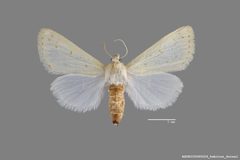
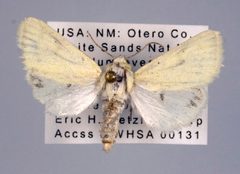
Schinia luxa is a noctuid native to southwestern North America. The exhibits variable coloration, ranging from plain white or light gray to individuals with dark gray spotting. are active from August to September, with a wingspan of 26–31 mm. The larvae are feeders on Mentzelia species.
Pronunciation
How to pronounce Schinia luxa: //ˈskɪniə ˈluksa//
These audio files are automatically generated. While they are not always 100% accurate, they are a good starting point.
Identification
Distinguished from other Schinia by its predominantly pale, unmarked or lightly spotted appearance. Many Schinia species exhibit bold, contrasting color patterns associated with specific flowers; S. luxa lacks such strong patterning. The combination of pale gray-white ground color, variable dark spotting, and southwestern distribution helps separate it from similar pale noctuids. Examination of genitalia may be required for definitive identification where range overlaps with related species.
Images
Habitat
Associated with supporting its larval plants, Mentzelia . These are typically found in arid and semi-arid environments of the southwestern United States and adjacent Mexico, including desert scrub, grasslands, and open rocky areas.
Distribution
North America: Arizona, California, Texas, New Mexico, and north-western Mexico.
Seasonality
are on wing from August to September, with exact timing varying by location.
Diet
Larvae feed on Mentzelia . feeding habits are not documented.
Host Associations
- Mentzelia - larval plant of flowering plants in Loasaceae, commonly known as blazingstars or stickleafs
Life Cycle
Complete with , larval, pupal, and stages. Larvae are herbivores on Mentzelia. and details are not documented.
Ecological Role
Larval herbivore on Mentzelia. role in is not documented; may contribute to pollination if nectar-feeding occurs. Serves as prey for various .
Human Relevance
Collected by lepidopterists; noted as a of interest among enthusiasts. No documented economic or agricultural significance.
Similar Taxa
- Other Schinia speciesMany share similar size and general ; S. luxa distinguished by its pale, relatively unpatterned appearance and specific geographic range
- Pale noctuids in subfamily HeliothinaeSimilar size and coloration; requires examination of wing pattern details and genitalia for separation
More Details
Sources and further reading
- BugGuide
- Wikipedia
- GBIF taxonomy match
- iNaturalist taxon
- NCBI Taxonomy
- Catalogue of Life
- Bug Eric: Wasp Wednesday: Not Wasp VIII
- Catch a Glimpse of Caterpillars During National Moth Week
- Bug Eric: White Prairie Clover: An Awesome Blossom
- Bug Eric: Remembering National Moth Week 2018
- Bug Eric: October 2018
- 2013 Oklahoma Collecting Trip iReport | Beetles In The Bush