
Schinia buta
Smith, 1907
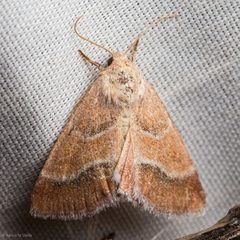
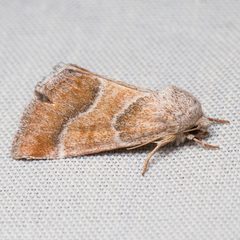
Schinia buta is a small noctuid to the arid regions of southeast California and northwest Nevada. The has a wingspan of approximately 28 mm. Its larvae are known to feed specifically on Brickellia californica, a member of the aster . Like other members of the Schinia, likely rest on or near their plant flowers.
Pronunciation
How to pronounce Schinia buta: //ˈskiː.ni.ə ˈbjuː.tə//
These audio files are automatically generated. While they are not always 100% accurate, they are a good starting point.
Identification
Can be distinguished from other Schinia by its restricted geographic range in southeast California and northwest Nevada. Identification to species level may require examination of genitalia or comparison with closely related species such as Schinia jaguarina, which occurs on different plants.
Images
Appearance
Small with wingspan of approximately 28 mm. Specific coloration and pattern details not documented in available sources.
Habitat
Arid regions of the Mojave Desert and adjacent areas, associated with stands of its larval plant Brickellia californica.
Distribution
to southeast California and northwest Nevada.
Diet
Larvae feed on Brickellia californica. feeding habits not documented.
Host Associations
- Brickellia californica - larval plant
Ecological Role
As a herbivore, the larvae contribute to the and nutrient cycling of their plant Brickellia californica. may serve as when visiting flowers.
Similar Taxa
- Schinia jaguarinaOccurs on different plants (Dalea ) and has broader distribution
- Other Schinia speciesMany Schinia are -specific and geographically restricted; accurate identification requires attention to range and host plant