
Heliolonche
Grote, 1873
Species Guides
5- Heliolonche carolus(Chicory Flower Moth)
- Heliolonche celeris
- Heliolonche joaquinensis
- Heliolonche modicella(Agoseris Flower Moth)
- Heliolonche pictipennis(Red-lined Moth)
Heliolonche is a of in the Noctuidae, Heliothinae, established by Augustus Radcliffe Grote in 1873. The genus comprises five recognized distributed in western North America. Species in this genus are small noctuids with distinctive wing patterns. The genus name derives from Greek roots suggesting sun and spear, though the etymological significance is unclear.
Pronunciation
How to pronounce Heliolonche: /ˌhiːliːoʊˈlɒŋki/
These audio files are automatically generated. While they are not always 100% accurate, they are a good starting point.
Identification
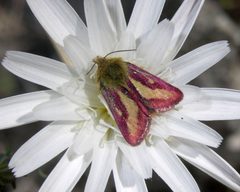
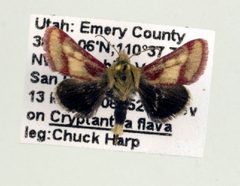
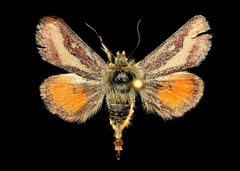
Members of Heliolonche are small (forewing length approximately 9-12 mm) that can be distinguished from related Heliothinae by genitalic characters, particularly in the male valvae structure. The forewings often show a pattern of pale markings against a darker ground color. H. pictipennis is notable for distinctly patterned wings with contrasting light and dark areas. Accurate identification to level generally requires dissection and examination of genitalia.
Images
Habitat
occur in arid and semi-arid regions of western North America, including grasslands, scrublands, and open woodland edges. H. celeris and H. modicella have been recorded from prairie and sagebrush steppe . H. joaquinensis is associated with the San Joaquin Valley region of California.
Distribution
Western North America, primarily the United States. Records span from the Great Plains westward to California, with concentrations in the southwestern states and California's Central Valley. The shows a distribution pattern centered on arid western regions.
Seasonality
are active primarily in spring and early summer, with periods varying by and latitude. Most records fall between April and July, with some species showing patterns in warmer southern areas.
Behavior
are and attracted to light. Larval is poorly documented; available records suggest ground-dwelling or low-growing herb feeding habits typical of the .
Ecological Role
As herbivorous larvae, likely contribute to nutrient cycling in arid grassland . serve as prey for including bats and night-feeding birds.
Human Relevance
No significant economic importance. Occasionally encountered by lepidopterists and enthusiasts in western North America. Not known as agricultural pests.
Similar Taxa
- HeliothisLarger size, broader wings, and different genitalic structure; Heliolonche are notably smaller with more compact wing shape.
- SchiniaSimilar size range but distinguished by wing pattern elements and male genitalia; Schinia often shows more pronounced and spots.
- DargidaOverlapping distribution but Dargida typically have longer, more slender forewings and different resting posture.
More Details
Taxonomic history
The was established by Grote in 1873 with Heliolonche modicella as type . Hardwick (1996) revised the genus and described H. joaquinensis based on California material. The genus has remained stable in its placement within Heliothinae, though the itself has undergone repeated reclassification in recent phylogenetic studies.
Etymology
The name combines Greek 'helios' (sun) and 'lonche' (spear or lance), though Grote did not explain his intended meaning. The name does not appear to reference any obvious morphological feature of the .