
Cropia
Walker, 1858
Species Guides
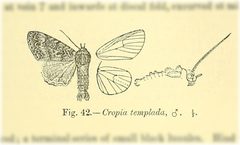
2Cropia is a of in the Noctuidae, erected by Francis Walker in 1858. The genus contains approximately 25 described distributed primarily in the Neotropical region. Species within this genus are part of the diverse owlet moth fauna and are classified within the Noctuinae. The genus has been subject to taxonomic revisions, with several species originally described under other genera later transferred to Cropia.
Pronunciation
How to pronounce Cropia: /ˈkro.pi.a/
These audio files are automatically generated. While they are not always 100% accurate, they are a good starting point.
Identification
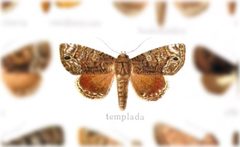
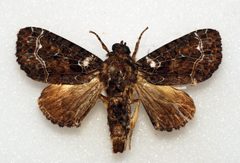
Distinguishing Cropia from related noctuid requires examination of genitalic characters and wing pattern details. The genus is characterized by specific combinations of forewing venation and male genitalia structure, though these features require microscopic examination. External varies considerably among , with forewing patterns ranging from relatively plain to distinctly marked with lines and spots. Accurate identification to species level generally requires dissection and comparison with .
Images
Distribution
Neotropical region, with records from Central and South America including Mexico, Rica, Panama, Colombia, Ecuador, Peru, Brazil, and other countries. The appears most diverse in tropical lowland and montane forests.
Similar Taxa
- Other Noctuinae generaMany noctuine share similar external ; Cropia is distinguished by genitalic and wing venation characters that require expert examination.
More Details
Species diversity
The includes 25 described as of current , with Cropia hadenoides Walker, [1858] as the type species. Several species were transferred from other genera, including Cropia cedica (formerly Phalaena cedica Stoll, [1782]) and Cropia connecta (formerly Mamestra connecta Smith, 1894).
Taxonomic history
Francis Walker established the in 1858 with Cropia hadenoides as the type. The genus has undergone periodic revision, with descriptions continuing into the 1930s (Cropia sigrida Schaus, 1933 being among the most recently described).