Bagisara brouana
Ferguson, 1997
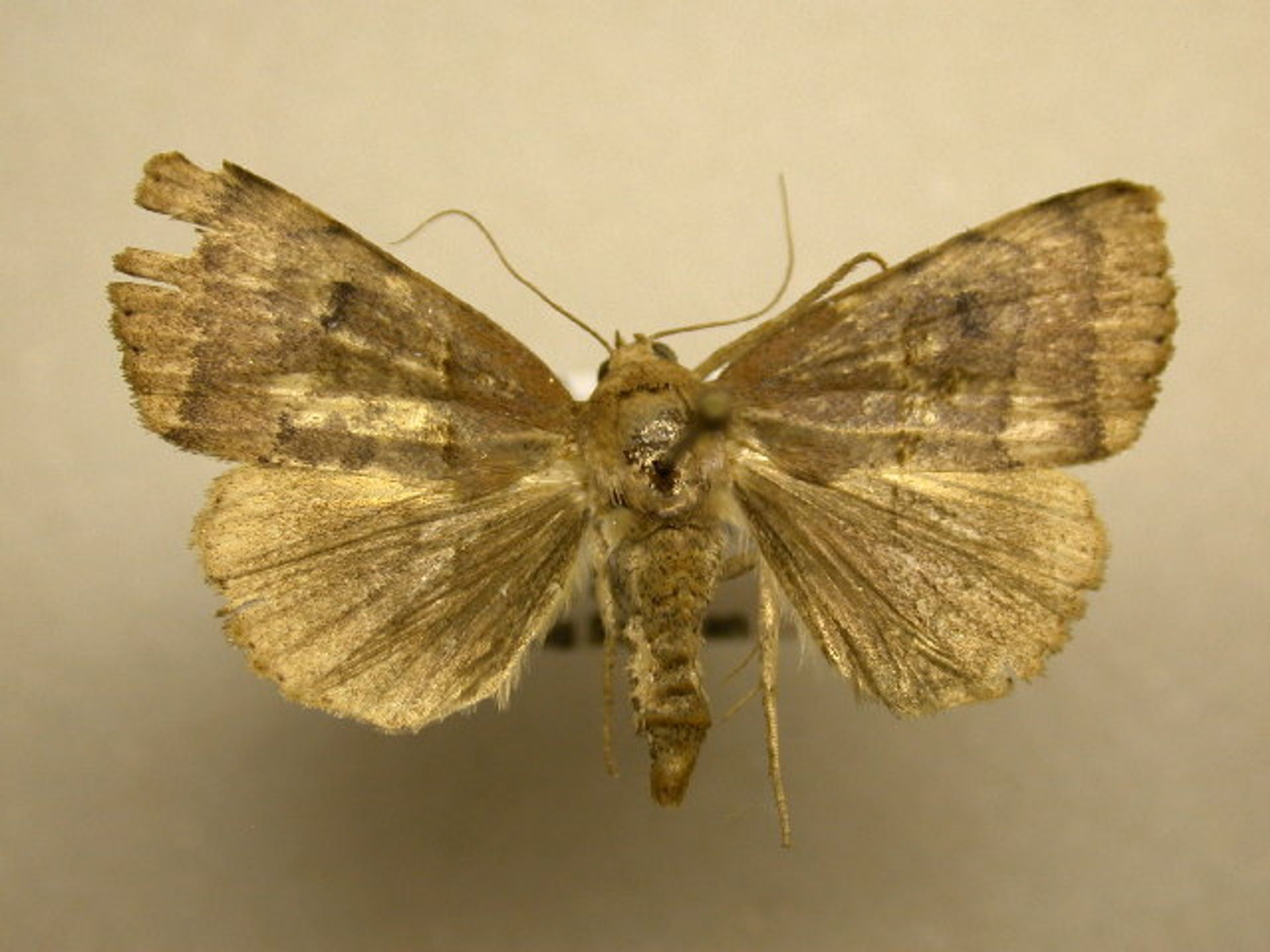
Bagisara brouana is a noctuid described by A.D.C. Ferguson in 1997. It is known from only two US states—Louisiana and Mississippi—representing one of the most geographically restricted in the . Its extremely limited range has been hypothesized to reflect specialized larval plant associations, potentially to a single plant genus or species with similarly restricted distribution. The species belongs to the Bagisarinae, a small New World group whose remains poorly documented.
Pronunciation
How to pronounce Bagisara brouana: /ˌbæɡɪˈsɑːrə bruˈɑnə/
These audio files are automatically generated. While they are not always 100% accurate, they are a good starting point.
Identification
No diagnostic features distinguishing B. brouana from are documented in available sources. As a member of Bagisarinae, it presumably shares the 's characteristic forewing venation and genitalic structures, but -level identification requires examination of type material or original description.
Images
Habitat
preferences are undocumented. Occurrence in Louisiana and Mississippi suggests association with Gulf Coastal Plain .
Distribution
to the United States, known only from Louisiana and Mississippi.
Behavior
have been attracted to light, as indicated by collection records. No other are documented.
Similar Taxa
- Bagisara buxeaCongeneric occurring in the southern United States; of Bagisara species are superficially similar and require genitalic dissection or reference to original descriptions for reliable separation.
- Other Bagisara speciesThe contains multiple poorly known with restricted distributions; accurate identification depends on examination of and Ferguson's 1997 revision.
More Details
Taxonomic context
Ferguson (1997) revised New World Bagisarinae and described B. brouana as one of two new from the southern United States. The remains one of the least studied groups within Noctuidae, with larval unknown for most species.
Conservation implications
The extremely narrow documented range raises potential conservation concerns, though formal assessment has not been conducted. The hypothesis of single--plant specialization, if confirmed, would increase vulnerability to disruption.