
Brachionycha
Hübner, 1819
sprawlers
Species Guides
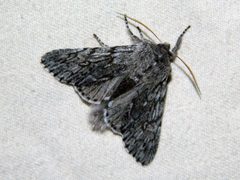
1- Brachionycha borealis(Boreal Fan Moth)
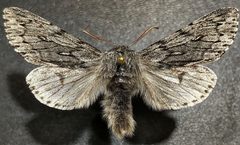
Brachionycha is a of noctuid erected by Jacob Hübner in 1819. The genus includes at least five described distributed across the Holarctic region, from Europe and Siberia to East Asia and North America. Species such as Brachionycha nubeculosa (the Rannoch sprawler) are known from northern Europe, while B. borealis occurs in the Great Lakes region and eastern Canada. The genus was first documented in China in 2007 with the discovery of B. nubeculosa and B. albicilia.

Pronunciation
How to pronounce Brachionycha: //brəˈkɪɔ.nɪ.kə//
These audio files are automatically generated. While they are not always 100% accurate, they are a good starting point.
Identification
Members of Brachionycha can be distinguished from related noctuid by genital characteristics, particularly features of the male and female genitalia as illustrated in taxonomic redescriptions. The genus is placed in the tribe Psaphidini within the Amphipyrinae. -level identification requires examination of genital structures and geographic provenance.
Images
Distribution
Holarctic distribution encompassing northern Europe (Denmark, Norway, Sweden), Siberia, the Altai and Sajan mountains, Japan, and North America (Michigan, Wisconsin, Manitoba, Alberta, Saskatchewan, Quebec, Ontario, Pennsylvania, northern West Virginia). First recorded in China in 2007.
Similar Taxa
- Other Psaphidini generaBrachionycha shares tribal placement with related noctuid ; differentiation requires genital examination
More Details
Taxonomic history
The was established by Jacob Hübner in 1819 and has been maintained in the tribe Psaphidini, Amphipyrinae. The Chinese records published in 2007 represent a significant range extension for the genus.
Species composition
Recognized include: B. nubeculosa (Esper, 1785), B. sajana Draudt, 1934, B. borealis (Smith, 1899), B. permixta Sugi, 1970, and B. albicilia Sugi. The specific epithet 'nubeculosa' translates to 'clouded,' referencing wing pattern.