Alypia mariposa
Grote & Robinson, 1868
Mariposa Forester
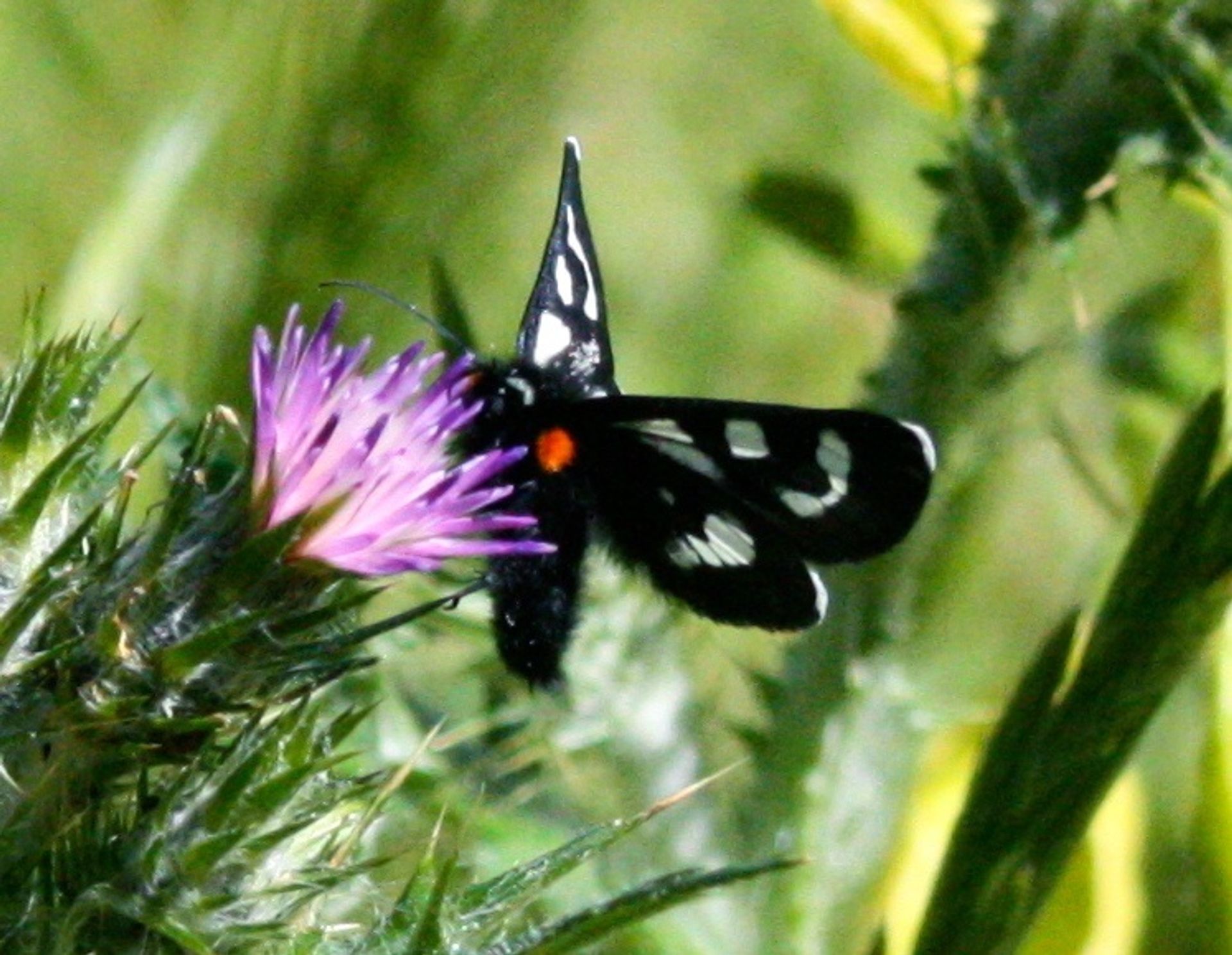
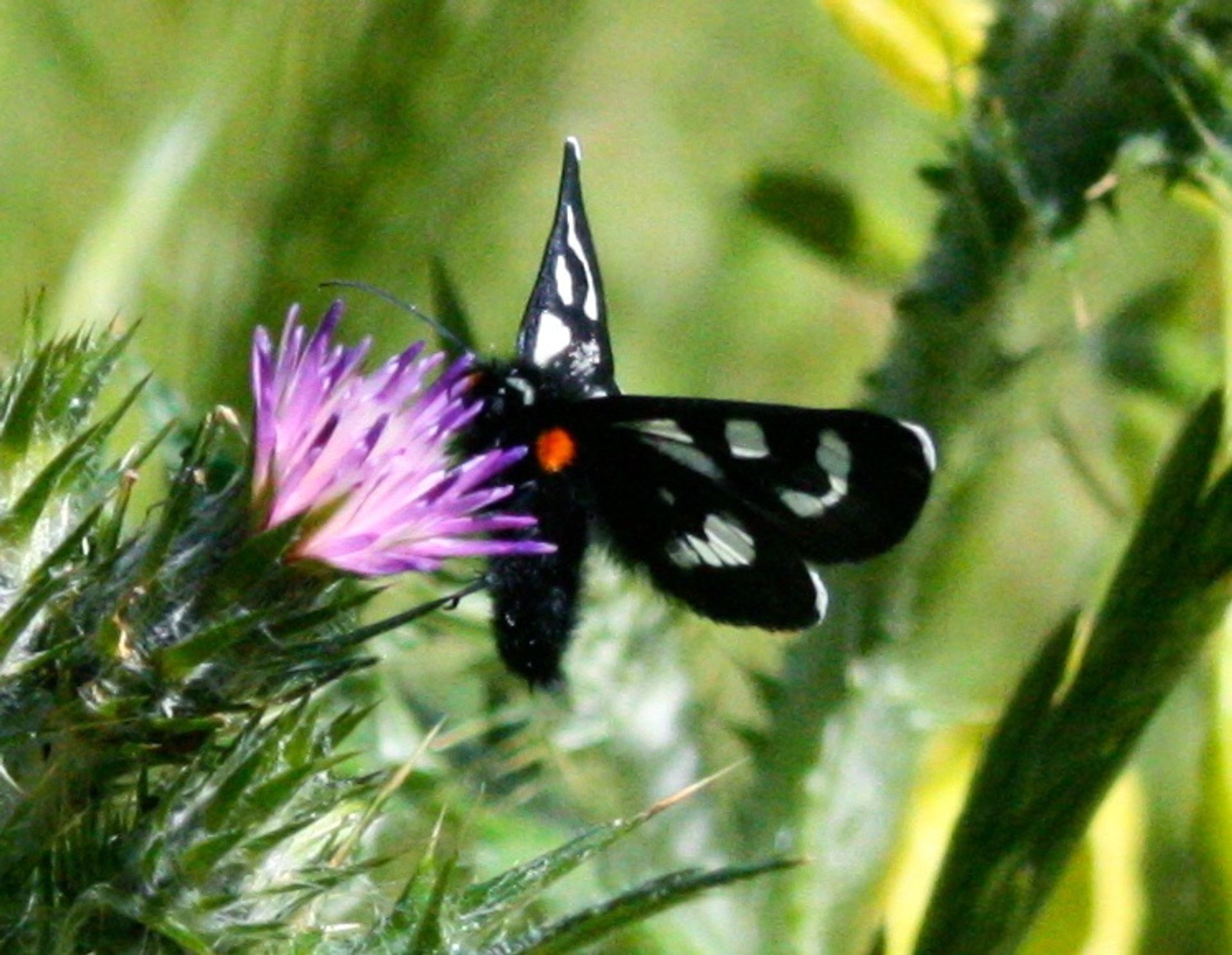
Alypia mariposa, the Mariposa Forester, is a day-flying in the Noctuidae, first described in 1868. It is to California's Coast Ranges and Sierra foothills, with a distribution spanning from Kern County northward to Placer County. are active in spring, flying during April through June. The is distinguished from its Alypia ridingsii by wing pattern differences.

Pronunciation
How to pronounce Alypia mariposa: /əˈlɪpiə ˌmæriˈpoʊsə/
These audio files are automatically generated. While they are not always 100% accurate, they are a good starting point.
Identification
Distinguished from the similar Alypia ridingsii by the absence of black lines through the white wing spots; in A. ridingsii, black lines cross the white spots. This wing pattern difference is the primary diagnostic feature for separating these two .
Images
Appearance
Medium-sized day-flying with patterned forewings. Wing pattern includes white spots without black lines running through them—this distinguishes it from Alypia ridingsii, which has black lines crossing the white spots. Overall coloration and pattern typical of the Alypia.
Habitat
Coast Ranges and Sierra foothills of California. Associated with supporting its larval plants.
Distribution
to California. Range extends from Kern and San Luis Obispo counties in the south to Placer County in the north, within the Coast Ranges and Sierra foothills.
Seasonality
fly during April, May, and June.
Diet
Larvae feed on Clarkia bottae and Clarkia unguiculata (evening primrose , Onagraceae). feeding habits not documented.
Host Associations
- Clarkia bottae - larval plantrecorded larval food plant
- Clarkia unguiculata - larval plantrecorded larval food plant
Life Cycle
Complete with , larva, pupa, and stages. Specific details of duration and stage not documented.
Behavior
Day-flying , active during spring months. fly during daylight hours.
Ecological Role
Larval herbivore on native Clarkia . Pollination role of not documented.
Human Relevance
No documented economic or cultural significance. Of interest to lepidopterists and naturalists studying California's fauna.
Similar Taxa
- Alypia ridingsiiOverlapping range and similar appearance; distinguished by presence of black lines through white wing spots (absent in A. mariposa)
More Details
Taxonomic history
First described by Augustus Radcliffe Grote and Coleman Townsend Robinson in 1868.
Conservation status
No formal conservation status assessment found; range restricted to California but appears to occupy intact within its distribution.
Sources and further reading
- BugGuide
- Wikipedia
- GBIF taxonomy match
- iNaturalist taxon
- Catalogue of Life
- All Flights Lead to the Butterfly Summit | Bug Squad
- Robert Michael Pyle, Butterflies and The Dark Divide | Bug Squad
- Butterfly Summit Features UC Davis Expert Art Shapiro | Bug Squad
- Robert Michael Pyle: The Face of Insect Conservation | Bug Squad
- A Hidden Treasure at UC Davis Biodiversity Museum Day | Bug Squad
- Take a Virtual Tour of the California Dogface Butterfly Habitat | Bug Squad