
Acronicta tritona
Hübner, 1818
Triton dagger moth
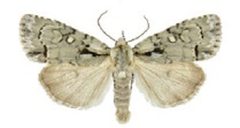
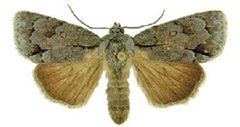
Acronicta tritona, commonly known as the Triton dagger , is a noctuid moth native to eastern North America. The was first described by Jacob Hübner in 1818. have a wingspan of 35–40 mm. The larva feeds on specific plants including Helonias bullata and various Vaccinium species.

Pronunciation
How to pronounce Acronicta tritona: /əˈkɹoʊnɪktə tɹɪˈtoʊnə/
These audio files are automatically generated. While they are not always 100% accurate, they are a good starting point.
Identification
The combination of size (35–40 mm wingspan), eastern North American distribution, and association with wetland or bog where Helonias bullata grows may aid identification. The larval plant specificity distinguishes it from some .
Images
Appearance
have a wingspan of 35–40 mm. The belongs to the dagger , characterized by forewings that typically feature a dark, dagger-shaped streak near the inner margin—though specific pattern details for A. tritona are not detailed in available sources.
Habitat
Associated with supporting its larval plants. Helonias bullata (swamp pink) grows in acidic wetlands, bogs, and wet meadows. Vaccinium occur in varied habitats including forests, barrens, and wetlands.
Distribution
Eastern North America: from Nova Scotia west to north-eastern Alberta, south to Florida and Texas, and west to Oregon.
Diet
Larva feeds on Helonias bullata (swamp pink) and Vaccinium , including Oxycoccos species and Vaccinium stamineum (deerberry).
Host Associations
- Helonias bullata - larval food plantswamp pink
- Vaccinium stamineum - larval food plantdeerberry
- Oxycoccos - larval food plantsmall cranberry and related
Similar Taxa
- Acronicta americanaAmerican dagger moth is larger with different larval plants (maple, box elder, etc.) and more widespread
- Acronicta betulaeBirch dagger moth is associated with birch trees rather than Vaccinium or Helonias
More Details
Nomenclature
Originally described as Triaena tritona by Hübner in 1818, later transferred to Acronicta.
Conservation context
Helonias bullata, a primary larval , is a rare and declining plant in parts of its range, which may affect local of the .