
Acronicta impressa
Walker, 1856
Impressive Dagger, Impressive Dagger Moth, Willow Dagger Moth
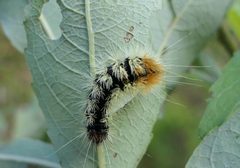
Acronicta impressa is a noctuid commonly known as the impressive dagger moth or willow dagger moth. The was first described by Francis Walker in 1856. It ranges across western North America from Canada to northwestern Mexico. are active in early to midsummer and are attracted to light. The caterpillars feed on a variety of woody plants including willow, poplar, and rose.
Pronunciation
How to pronounce Acronicta impressa: /əˈkrɒnɪktə ɪmˈprɛsə/
These audio files are automatically generated. While they are not always 100% accurate, they are a good starting point.
Identification
Acronicta impressa can be distinguished from other dagger moths by its western North American distribution combined with specific forewing pattern elements. It is most similar to other gray Acronicta but can be separated by the combination of wing pattern details and geographic range. Accurate identification often requires reference to genitalia dissection or comparison with verified specimens. The 'willow dagger ' reflects its association with willow plants, which can aid in field identification where host plant data is available.
Images
Habitat
Found in a variety of across its western range, including riparian areas, woodlands, and shrublands where plants grow. The presence of willow, poplar, or other recorded host plants is indicative of suitable habitat.
Distribution
Western North America from western Canada (Alberta, Manitoba, Saskatchewan) through the western United States to northwestern Mexico. Records from Vermont suggest possible eastern occurrences or misidentifications requiring verification.
Seasonality
are on wing from early to midsummer, with exact timing varying by location. The period corresponds with the warm season in temperate regions of western North America.
Diet
Larval food plants include bitterbrush (Purshia tridentata), rose (Rosa ), aspen (Populus tremuloides), poplar (Populus species), and willow (Salix species). feeding habits are not documented.
Host Associations
- Purshia tridentata - larval food plantbitterbrush
- Rosa species - larval food plantrose
- Populus tremuloides - larval food plantaspen
- Populus species - larval food plantpoplar
- Salix species - larval food plantwillow
Life Cycle
Complete with , larva, pupa, and stages. Specific details of timing and stage are not documented in available sources. Larvae feed on leaves of plants.
Behavior
are and attracted to light. Specific behavioral details beyond period and light attraction are not documented.
Ecological Role
Larvae function as herbivores on woody plants, particularly willows and related . may serve as prey for and as potential , though specific ecological interactions are not documented. The species contributes to nutrient cycling through herbivory and serves as a food source in .
Human Relevance
No significant documented impacts. Not known to be an agricultural pest. The is of interest to lepidopterists and naturalists studying western North American fauna. A. i. emaculata may have localized conservation interest.
Similar Taxa
- Acronicta americanaAmerican dagger moth is larger and occurs primarily in eastern North America; caterpillars have distinctive long black 'dagger' setae not reported for A. impressa.
- Acronicta radcliffeiRadcliffe's dagger moth occurs in eastern deciduous forests; distinguished by distribution and specific wing pattern details.
- Other Acronicta speciesMany Acronicta are gray with dagger marks; accurate identification to species level often requires genitalia examination and geographic context.
More Details
Subspecies
Two are recognized: Acronicta impressa impressa (nominate subspecies) and Acronicta impressa emaculata.
Taxonomic Note
Formerly placed in basionym Acronycta impressa; current classification places the in Acronicta (Noctuidae: Acronictinae).
Sources and further reading
- BugGuide
- Wikipedia
- GBIF taxonomy match
- iNaturalist taxon
- NCBI Taxonomy
- Catalogue of Life
- Megalopygidae | Beetles In The Bush
- Bug Eric: New Mexico Dragonfly Blitz - Day 4
- Bug Eric: Remembering Moth Week 2025
- Bug Eric: First Night of Blacklighting
- Seventy-four cuckoos in the nest: A new key to all North European cuckoo wasp species | Blog
- Not all Florida tiger beetles are rare | Beetles In The Bush