
Acronicta grisea
Walker, 1856
Gray Dagger
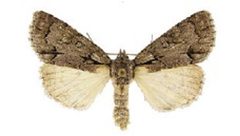
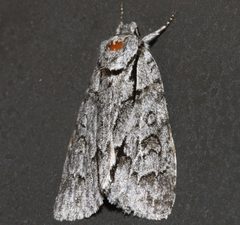
Acronicta grisea, commonly known as the gray dagger, is a noctuid first described by Francis Walker in 1856. It occurs across southern Canada and the northern United States, with a wingspan of 30–40 mm. are active in midsummer.
Pronunciation
How to pronounce Acronicta grisea: /əˈkrɒnɪktə ˈɡrɪsɪə/
These audio files are automatically generated. While they are not always 100% accurate, they are a good starting point.
Identification
The gray dagger can be distinguished from other Acronicta by its gray coloration and geographic range. The species name 'grisea' (Latin for gray) refers to this characteristic. Two are recognized: A. g. grisea and A. g. revellata.
Images
Appearance
Wingspan 30–40 mm. Overall coloration gray, consistent with the . Specific wing pattern details are not documented in available sources.
Distribution
Transcontinental in southern Canada and the northern United States, ranging from the Atlantic to the Pacific coast. Documented from Alberta, Manitoba, and Saskatchewan in Canada, and Vermont in the United States.
Seasonality
are on wing in midsummer. Specific period dates are not documented in available sources.
Similar Taxa
- Acronicta americanaBoth are dagger moths in the Acronicta, but A. americana (American dagger ) has yellowish coloration and occurs in eastern North America with different larval associations.
- Acronicta betulaeBoth are dagger moths with similar , but A. betulae (birch dagger ) is associated with birch trees and has more striking wing patterning with apparent two-layered forewings.
More Details
Subspecies
Two are recognized: Acronicta grisea grisea and Acronicta grisea revellata.
Sources and further reading
- BugGuide
- Wikipedia
- GBIF taxonomy match
- iNaturalist taxon
- NCBI Taxonomy
- Catalogue of Life
- Megalopygidae | Beetles In The Bush
- Bug Eric: New Mexico Dragonfly Blitz - Day 4
- Bug Eric: Remembering Moth Week 2025
- Bug Eric: First Night of Blacklighting
- Lifting the veil over mysterious desert truffles: Terfezia’s ecology and diversity towards cultivation | Blog
- Carried with the wind: mass migration of Larch Budmoth to the Russian High Arctic | Blog