
Heminocloa mirabilis
(Neumoegen, 1884)
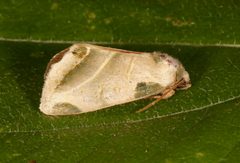
Heminocloa mirabilis is a and the sole member of its within the Noctuidae. Originally described as Basilodes mirabilis by Berthold Neumoegen in 1884, it was later placed in the genus Heminocloa erected by William Barnes and Foster Hendrickson Benjamin in 1924. The species is known only from the US state of Arizona, with 69 observations recorded on iNaturalist.

Pronunciation
How to pronounce Heminocloa mirabilis: /ˌhɛmɪˌnoʊˈkloʊə mɪˈræbɪlɪs/
These audio files are automatically generated. While they are not always 100% accurate, they are a good starting point.
Images
Distribution
Restricted to the US state of Arizona. Records indicate presence in North America with no documented range extensions beyond Arizona.
More Details
Taxonomic History
The was originally described under the name Basilodes mirabilis by Berthold Neumoegen in 1884. It was subsequently transferred to the newly erected Heminocloa by Barnes and Benjamin in 1924, where it remains the only species.
Genus Characteristics
Heminocloa is a , meaning it contains only this single . The genus is classified within the Acontiinae and tribe Chamaecleini of the Noctuidae (owlet moths).