
Chamaecleini
Keegan & Wagner, 2019
bird dropping moths
Genus Guides
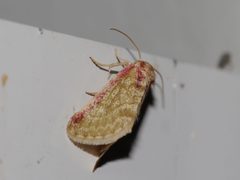
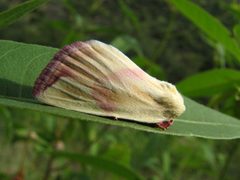
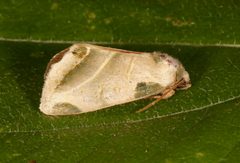
6Chamaecleini is a small tribe of within the Noctuidae, containing approximately 9 and 14 described . The tribe was formally established by Keegan & Wagner in 2019. Members are commonly referred to as "bird dropping moths," a name reflecting their cryptic coloration that resembles avian . The tribe includes genera such as Chamaeclea, Megalodes, and Aleptinoides.
Pronunciation
How to pronounce Chamaecleini: //ˌkæmiˈklaɪnaɪ//
These audio files are automatically generated. While they are not always 100% accurate, they are a good starting point.
Identification
Chamaecleini can be distinguished from other Noctuidae by their characteristic bird-dropping mimicry coloration—typically mottled patterns of white, gray, and black. The tribe is placed within Acontiinae, and separation from related tribes requires examination of genitalic structures and wing venation patterns. The nine constituent vary in size and pattern but share the general cryptic appearance.
Images
Distribution
The tribe has a broad distribution with representatives in North America (including Chamaeclea, Aleptinoides, Heminocloa, Hemioslaria, Thurberiphaga), Australia (Austrazenia), and other regions (Megalodes, Trogotorna, Chalcoecia). Specific range details for most remain poorly documented.
Host Associations
- Thurberia thespesioides - plant Thurberiphaga is named for and associated with this plant; specific feeding records limited
Human Relevance
The Thurberiphaga has been studied for its potential as a agent for wild cotton (Thurberia thespesioides), a pest plant in some agricultural regions.
Similar Taxa
- AcontiiniAlso placed in Acontiinae; distinguished by genitalic and wing pattern details
- Other Noctuidae tribesChamaecleini's bird-dropping mimicry is convergent with some other noctuid groups; tribal assignment requires phylogenetic and morphological analysis
More Details
Taxonomic History
The tribe was recently established in 2019 by Keegan & Wagner, reflecting updated phylogenetic understanding of relationships within Acontiinae. Prior to this, constituent were variously placed in other groupings.
Genus Megalodes
The Megalodes (Guenée, 1852) is notably older than the tribe itself, having been described in the mid-19th century. Its inclusion in Chamaecleini represents a significant taxonomic reassignment based on modern molecular and morphological data.