
Pseudorgyia
Harvey, 1875
Species Guides
2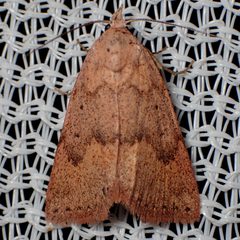
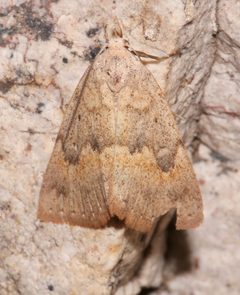
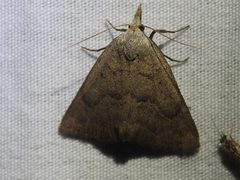
Pronunciation
How to pronounce Pseudorgyia: //suˌdɔrˈdʒaɪə//
These audio files are automatically generated. While they are not always 100% accurate, they are a good starting point.
Identification
Pseudorgyia can be distinguished from the superficially similar Orgyia (tussock moths) by less pronounced tufting on the and , and generally more subdued color patterns. The genus lacks the dense hair tufts characteristic of true tussock moths. Male are bipectinate (feather-like), while female antennae are (thread-like).
Images
Distribution
North America, with records from the United States and southern Canada.
Similar Taxa
More Details
Taxonomic placement
Pseudorgyia has been variously placed in different over time but is currently classified in Erebidae, Calpinae, based on molecular and morphological evidence. It was historically associated with the tussock moths (Lymantriinae, now also in Erebidae) due to superficial resemblance.