
Hypenodes
Doubleday, 1850
Species Guides
6- Hypenodes caducus(Large Hypenodes Moth)
- Hypenodes fractilinea(Broken-line Hypenodes)
- Hypenodes franclemonti(Franclemont's Hypenodes Moth)
- Hypenodes n-sp
- Hypenodes palustris(Swampland Hypenodes)
- Hypenodes sombrus(Shaded Hypenodes)
Hypenodes is a of small in the Erebidae, Hypenodinae. The genus was erected by Henry Doubleday in 1850 and contains approximately 25 described arranged in three species groups: humidalis, kalchbergi, and orientalis, plus several ungrouped species. Species occur primarily in the Holarctic region, with some extending into the Oriental region. The genus was formerly classified in the subfamily Strepsimaninae of Noctuidae.
Pronunciation
How to pronounce Hypenodes: /hɪˈpɛnəˌdiːz/
These audio files are automatically generated. While they are not always 100% accurate, they are a good starting point.
Identification
Distinguished from similar small erebid by the combination of: long, narrow forewings; distinctive wing venation with stalked 8 and 10 in forewing and stalked veins 3,4 and 6,7 in hindwing; palpi with elongated second joint bearing long hair above; and short, naked third joint. The absence of vein 9 in the forewing is a key diagnostic character. -level identification requires examination of genitalia and wing pattern details.
Images
Appearance
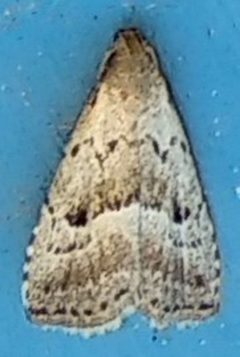
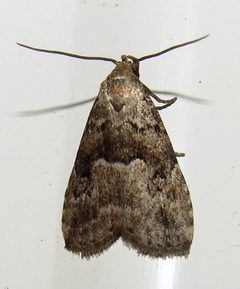
Small with long, narrow forewings. Palpi with second joint elongated and fringed with long hair above; third joint short, naked, and oblique. Frontal tuft short. ringed and minutely ciliated in males. smoothly scaled. bears a basal tuft. Legs with almost naked tibia. Forewing venation: 6 and 7 arise near the end of the ; veins 8 and 10 stalked with vein 9 absent. Hindwing venation: veins 3 and 4 stalked; veins 6 and 7 stalked; vein 5 arises from the middle of the discocellulars.
Habitat
in the humidalis group, including the type species H. humidalis (marsh oblique-barred ), are associated with marshy and wetland . Specific habitat requirements for other species groups remain poorly documented.
Distribution
Holarctic distribution with extensions into the Oriental region. Documented from northern Europe (Denmark, Norway, Sweden), North America (Vermont, United States; Canada), and across the Palearctic from western Europe through central Asia to Japan. Several are to restricted regions including Cyprus (H. cypriaca), Crimea (H. crimeana), and Anatolia (H. anatolica).
Similar Taxa
- Other Hypenodinae generaShare characteristics but differ in wing venation details, particularly the stalking of 8 and 10 in the forewing and the structure of the palpi.
- Former Noctuidae: Strepsimaninae membersHistorically confused due to previous classification; separated by modern phylogenetic placement in Erebidae and subtle morphological differences in wing venation and genitalia.
More Details
Taxonomic History
Previously classified in Strepsimaninae within Noctuidae; transferred to Erebidae: Hypenodinae based on phylogenetic revisions.
Species Groups
Three recognized groups based on and distribution: humidalis group (primarily Nearctic and western Palearctic, wetland-associated), kalchbergi group (, European), and orientalis group (eastern Palearctic and Oriental).
Nomenclatural Note
Hypenodes palustris Ferguson, 1954 was originally misspelled as 'plaustris' in some literature.