
Hypenodinae
Genus Guides
5- Dasyblemma
- Dyspyralis
- Hypenodes
- Hypenopsis
- Parahypenodes(masked parahypenodes moth)
Hypenodinae is a of small within Erebidae, characterized by reduced or absent simple (ocelli) and quadrifine hindwing venation in most . The group includes the micronoctuid moths (tribe Micronoctuini), which were formerly treated as a separate but are now recognized as part of Hypenodinae based on molecular . Wingspans range from approximately 9–13 mm in many species. Some members are significant agricultural pests, while others occupy diverse terrestrial .
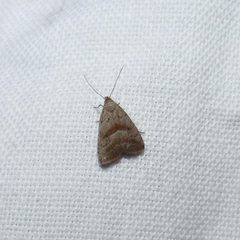
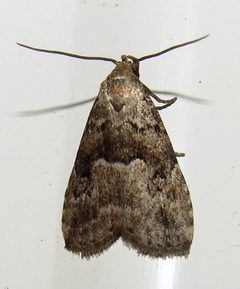
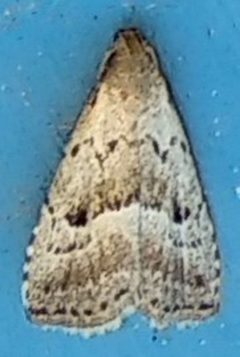
Pronunciation
How to pronounce Hypenodinae: /haɪˌpɛnəˈdaɪniː/
These audio files are automatically generated. While they are not always 100% accurate, they are a good starting point.
Identification
Distinguished from other Erebidae by the combination of small size, reduced or absent ocelli, and quadrifine hindwing venation (in most ). Micronoctuini can be identified by presence of ocelli and bifine hindwing , contrasting with other Hypenodinae. Genitalia characters used for species-level identification: Parens species distinguished by signum shape (triangular vs. cross-shaped) and ductus bursae .
Images
Appearance
Small with wingspans typically 9–13 mm. Most lack ocelli (small simple ) near the . Hindwing venation is quadrifine (four-veined) in most species. Micronoctuini members possess ocelli and bifine (two-veined) hindwing . Forewing shape variable; some species have rounded apices.
Habitat
Diverse terrestrial including agricultural fields. Schrankia costaestrigalis associated with potato-producing areas. Collection records span varied landscapes from mountainous regions (Mt. Bongmisan) to coastal islands (Jindo Island, Jeju-do).
Distribution
Widespread across multiple continents. Schrankia costaestrigalis: Europe, Central and North Asia, North Africa, Australia, and China (first recorded Yulin City, Guangxi, 2017). Parens occi: Korea, China, Japan, Russian Far East. Parens fibigerina: to Korea.
Seasonality
period spans June to November based on collection records. activity with attraction to artificial light sources.
Diet
Larval diet varies by . Schrankia costaestrigalis feeds on potato tubers (Solanum tuberosum) and broad bean (Vicia faba), and various herbaceous and woody plants. Larval of many (Anachrostis, Dasyblemma, Dyspyralis, Hypenodes, Luceria, Parahypenodes) unknown.
Host Associations
- Solanum tuberosum - larval food plantpotato tubers damaged
- Vicia faba - larval food plantbroad bean
Life Cycle
Complete with , larva, pupa, and stages. Specific duration and larval instar details not documented for most .
Behavior
; attracted to ultraviolet and visible light sources including black-light lamps, LepiLED, and mercury-vapor lamps. Schrankia costaestrigalis causes significant agricultural damage with potato tuber damage rates of 50–80%, reaching 100% in some fields.
Ecological Role
Schrankia costaestrigalis acts as an agricultural pest threatening food security and commercial potato production. Ecological roles of most other undescribed.
Human Relevance
Schrankia costaestrigalis is an economically significant pest of potato crops in China, with potential affecting winter potato industry. Other have no documented economic impact.
Similar Taxa
- Micronoctuidae (as family)Formerly treated as separate , now synonymized as tribe Micronoctuini within Hypenodinae based on molecular ; distinguished by presence of ocelli and bifine hindwing versus other Hypenodinae
- ErebinaeClosely related within Erebidae; phylogenetic analysis shows Hypenodinae as independent lineage sister to Erebinae and Catocalinae
- CatocalinaeClosely related within Erebidae; Hypenodinae forms independent lineage in phylogenetic analyses
Misconceptions
Micronoctuidae was historically treated as a distinct but molecular phylogenetic studies demonstrated it should be classified as tribe Micronoctuini within Hypenodinae.
More Details
Phylogenetic placement
Mitochondrial analysis of Schrankia costaestrigalis (16,376 ) represents first complete mitogenome for Hypenodinae, confirming as independent lineage closely related to Erebinae and Catocalinae.
Taxonomic composition
Includes seven in unassigned tribe (Anachrostis, Dasyblemma, Dyspyralis, Hypenodes, Luceria, Parahypenodes, Schrankia) and tribe Micronoctuini with multiple subtribes and genera.
Sources and further reading
- BugGuide
- Wikipedia
- iNaturalist taxon
- NCBI Taxonomy
- Catalogue of Life
- Description of a new species of Parens Fibiger, 2011 (Lepidoptera, Erebidae, Hypenodinae) from Korea.
- Complete Mitochondrial Genome Characterization of Schrankia costaestrigalis (Insecta: Erebidae: Hypenodinae) and Its Phylogenetic Implication.