
Hypenodes caducus
Dyar, 1907
Large Hypenodes Moth
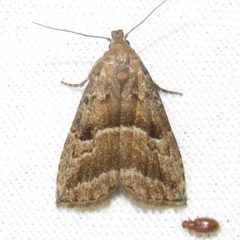
Hypenodes caducus is a small in the Erebidae, first described by Harrison Gray Dyar Jr. in 1907. The occurs across eastern and central North America, with records from Canada to the southeastern United States. It is commonly known as the large hypenodes moth, a name reflecting its relatively larger size compared to .
Pronunciation
How to pronounce Hypenodes caducus: /hʌɪpɪˈnoʊdiːz kəˈdjuːkəs/
These audio files are automatically generated. While they are not always 100% accurate, they are a good starting point.
Identification
The can be identified by its small size (wingspan 12–15 mm) and its placement within the Hypenodes. The specific epithet 'caducus' and the 'large hypenodes ' suggest it is larger than other Hypenodes species, though specific diagnostic features distinguishing it from are not documented in available sources.
Images
Distribution
Found in North America. Documented occurrences include British Columbia, Ontario, and Quebec in Canada; and Maryland, Massachusetts, Michigan, Minnesota, New York, Ohio, South Carolina, Vermont, and Wisconsin in the United States.
More Details
Original Description
First described by Harrison Gray Dyar Jr. in 1907, originally placed in the Menopsimus as Menopsimus caducus before being transferred to Hypenodes.