
Chytolita morbidalis
(Guenée, 1854)
Morbid Owlet, Morbid Owlet Moth
Chytolita morbidalis is a litter moth in the Erebidae, commonly known as the Morbid Owlet. It is widely distributed across North America, ranging from coast to coast in the northern United States and Canada, extending south to North Carolina, Texas, and Florida. The inhabits deciduous woodlands and forest edges. are and attracted to light.
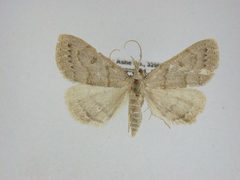
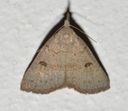
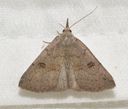
Pronunciation
How to pronounce Chytolita morbidalis: //kaɪtoʊˈlaɪtə mɔːrˈbɪdəlɪs//
These audio files are automatically generated. While they are not always 100% accurate, they are a good starting point.
Identification
Distinguished from similar Chytolita by the combination of pale gray ground color and the pattern of dark forewing markings, particularly the discal spot and wavy postmedial line. C. morbidalis is generally paler than C. petrealis, which has darker, more contrasting markings. Genitalia examination may be required for definitive identification of worn specimens. The species is also similar to some Macrochilo species, from which it differs in forewing pattern and genitalia structure.
Images
Appearance
have forewings that are pale gray to brownish-gray with variable darker markings. A distinct dark discal spot is usually present, and the postmedial line is often wavy or irregular. The hindwings are lighter, typically whitish-gray with faint venation visible. Wingspan ranges from approximately 18–25 mm. The body is slender with a fuzzy .
Habitat
Deciduous woodlands and forest edges. Associated with leaf litter and moist woodland environments.
Distribution
North America: transcontinental in the northern United States and Canada, extending south to North Carolina in the east, Texas in the central region, and Florida in the southeast.
Seasonality
have been recorded from May through October in most of the range, with peak activity in summer months. Multiple occur in the southern part of the range.
Behavior
are and frequently attracted to artificial light sources. Larval is poorly documented but likely involves feeding on decaying leaf litter and detritus based on related .
Ecological Role
Larvae likely contribute to decomposition of leaf litter in forest . serve as prey for including bats and birds.
Human Relevance
Occasionally encountered by enthusiasts at light traps. No economic significance.
Similar Taxa
- Chytolita petrealisSimilar size and wing shape, but darker with more contrasting forewing pattern; ranges overlap in eastern North America
- Macrochilo absorptalisFormerly placed in same ; similar and appearance but differs in forewing pattern details and genitalia
More Details
Taxonomic History
This has been transferred between multiple times, having been classified under Herminia, Macrochilo, and Chytolita. The current placement in Chytolita reflects revised understanding of herminiine relationships based on morphological and molecular data.